
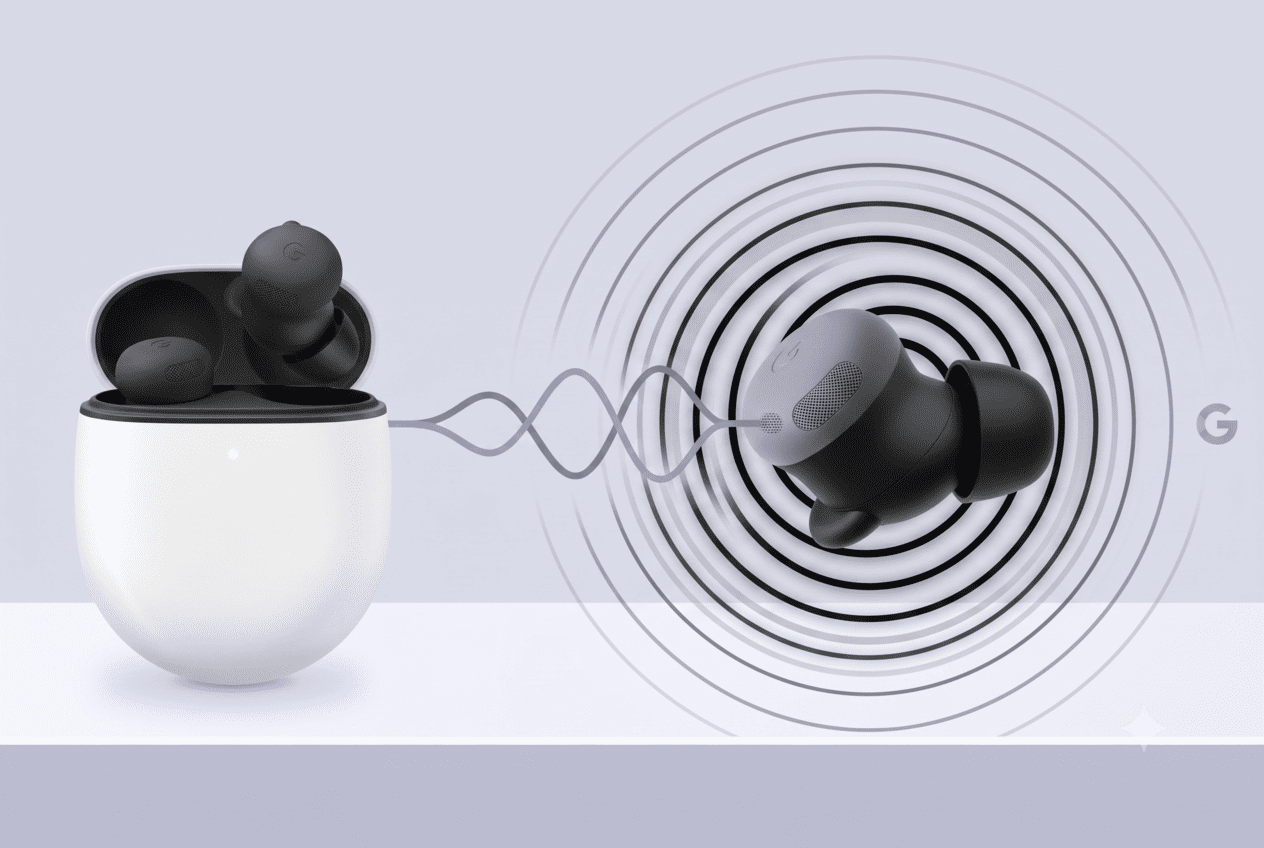
Google Pixel Buds Range in 2025-2026: Critical Analysis of Pixel Buds 2a and Pro 2
Google's Offensive on Mobile Audio
The True Wireless (TWS) earbud market has reached a saturation stage in 2026 where purely hardware innovation is no longer enough. For Google, the challenge is no longer just producing sound, but unifying its Pixel ecosystem around a shared silicon architecture and deep AI integration. Faced with the closed ecosystems of Apple and Sony, Mountain View is betting on design consistency and technical upgrades to lock in its users.
The renewal of the range marks a strategic turning point: after four years of stagnation for the A-series, Google is executing a true technical democratization. By bringing premium technologies down to its entry-level model, the brand aims to turn its earbuds into smart extensions of its smartphones. This transition begins with the Pixel Buds 2a, which redefine expectations for the mid-range.
Google Pixel Buds 2a: The New Mid-Range Standard?
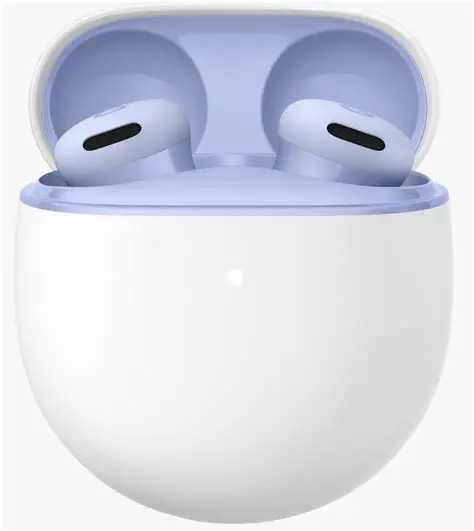
Succeeding the original Pixel Buds A, the Pixel Buds 2a finally introduce active noise cancellation (ANC) at a price point of $129. This transition to ANC is not just another line on the spec sheet; it is made possible by the integration of the Tensor A1 chip and the Silent Seal 1.5 system. For the urban user, this translates to effective filtering of transit noise (bus, subway), with lab tests (PCMag) confirming a 76% reduction.
Acoustically, Google replaced the old 12mm drivers with 11mm models. Far from being a downgrade, this choice reflects precision engineering where the Tensor A1 processor compensates for the size reduction through superior software processing, delivering a cleaner signal. In terms of endurance, we measured a real-world battery life of 6 hours and 46 minutes with ANC, which remains solid. Finally, the adoption of the IP54 rating now ensures protection against dust and water splashes, an essential standard in 2026. However, despite these advancements, Google reserves its cutting-edge technologies for its flagship.
Pixel Buds Pro 2: The Technological Showcase and the Limits of Excellence
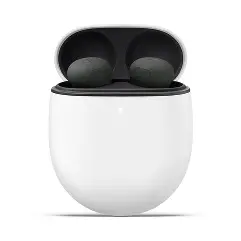
The Pixel Buds Pro 2 represent Google's high-end response. They fully exploit the Tensor A1 processor to drive the Silent Seal 2.0 system, designed to double the effectiveness of noise cancellation compared to the previous generation. With measured attenuation up to 79%, these earbuds establish themselves as a serious productivity tool for professionals in open-plan offices.
However, a frustrating reality remains: in 2026, Google still clings to a regrettable technical conservatism regarding codecs. Relying on SBC and AAC on a $229 "Pro" product is a major shortcoming against competitors that generalize LDAC or aptX Adaptive. The sound reproduction is rich and dynamic, but restricted for audiophiles. Ergonomically, the "twist-to-adjust" design with a silicone stabilizer ensures exemplary stability during sporting activities, without the pressure points of the old wings. Feedback (Reddit/SomeGadgetGuy) confirms comfort is maintained over long sessions, a crucial point for travelers. To visualize the technical trade-offs between the two models, here is a strict comparison.
Technical Comparison: Pixel Buds 2a vs Pixel Buds Pro 2
| Feature | Pixel Buds 2a | Pixel Buds Pro 2 |
|---|---|---|
| Launch Price | $129 | $229 |
| Processor | Tensor A1 | Tensor A1 |
| Microphones | 2 per earbud | 3 per earbud |
| Sensors (Gyro/Accel) | Absent | Present |
| Wireless Charging | No | Yes |
| Battery Life with ANC | 7h | 8h |
| Protection Rating | IP54 | IP54 |
Artificial Intelligence and Ecosystem: Gemini in Your Ear
A major advancement distinguishes the Pixel Buds 2a: the charging case is no longer a sealed, disposable block. Analysis from HardwareZone confirms that using a simple Torx screwdriver allows access to the lithium-ion battery. Even more impressive, Google has officially committed to providing spare parts for 5 years after the end of commercialization, a strong argument for corporate fleets and users concerned about their investment.
There is, however, an important nuance: although home replacement is technically straightforward, Google officially restricts this operation to authorized service centers under penalty of warranty voiding. This contradiction between an open design and a restrictive service policy complicates parts access for the general public. Despite this, this architecture marks a notable progress in an industry accustomed to planned obsolescence.
Which Model for Which Use?
In 2026, the Google Buds range displays a logical but not uncriticized segmentation. Your choice should be based on your equipment and mobility requirements.
- For budget and essentials: Pixel Buds 2a. This is the rational choice. For $129, you get high-performance noise cancellation (76%), IP54 protection, and access to Gemini. It is the ideal option for standard Android users who do not see value in head tracking or wireless charging.
- For performance and total integration: Pixel Buds Pro 2. They justify their $229 price tag for owners of recent Pixel devices and frequent travelers. The "Silent Seal 2.0" ANC is significantly more aggressive against complex noises, and wireless charging adds appreciable daily convenience.
In conclusion, while Google succeeds in its software integration and hardware durability bets, its refusal to adopt high-resolution codecs remains the main barrier to total dominance of the premium segment against Sony or Bose. The 2026 range is excellent, but it remains a victory of software engineering over audiophile ambition.