
%20(1).png)
AirPods 4 ANC vs AirPods Pro 3: The Complete Guide to Choosing Sonic Excellence
The State of Mobile Audio at Apple
The segmentation of Apple's audio lineup is undergoing a deep transformation. For a long time, the distinction between the classic and Pro lines relied primarily on price and the presence of ear tips. Today, the choice between an 'Open-fit' model like the AirPods 4 and an 'In-ear' architecture like the AirPods Pro 3 revolves around technological utility and convergence with health. Apple is no longer just offering earbuds, but embedded AI terminals whose acoustic capabilities serve as the foundation for biometric and noise-reduction features once reserved for over-ear headphones.
This evolution requires a rigorous analysis of specifications, as the barrier of Active Noise Cancellation (ANC) has now been crossed by open models, forcing the Pro models to reinvent themselves through acoustic immersion and advanced medical tracking.
AirPods 4 with Active Noise Cancellation: Performance in an Open Format
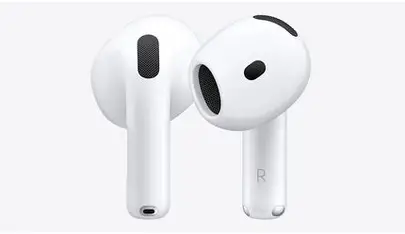
The integration of ANC into the AirPods 4 marks a major strategic turning point. Apple is responding directly to a persistent demand, widely documented on specialized forums like Reddit, from users who reject the physical intrusion of silicone ear tips but no longer want to sacrifice acoustic comfort in noisy urban environments. This is the challenge of sound performance without passive sealing.
Under the hood, the AirPods 4 are powered by the H2 chip, the pillar of computational audio. This architecture allows offering features like Voice Isolation and Personalized Spatial Audio. In terms of robustness, they feature an IP54 protection rating for both earbuds and case, ensuring resistance to dust and sweat.
Battery life measurements in real-world conditions must be analyzed precisely: expect up to 4 hours of continuous listening with ANC activated on a single charge. The USB-C charging case, also compatible with Apple Watch chargers and Qi devices, brings total battery life to 20 hours with ANC (and up to 30 hours if noise cancellation is turned off). Stability tests, notably reported by Forbes, confirm that despite the absence of tips, the fit remains reliable during daily commutes.
Clearly, this architecture is the ideal solution for urban users who want to stay aware of their surroundings while mitigating noise nuisances. For those looking to turn their earbuds into true physiological data centers, the AirPods Pro 3 open a new dimension.
AirPods Pro 3: The New Frontier of the Smart Hearable
The AirPods Pro 3 redefine the earbud as a biometric sensor. Apple positions this model as a preventive health tool. The major innovation lies in the integration of an infrared heart rate sensor (PPG) pulsed 256 times per second to measure blood flow light absorption without distracting the user.
Concretely, this addition allows precise tracking of over 50 workout types via the Fitness app. On the acoustic side, the Pro 3 adopt an unprecedented multiport architecture that precisely controls airflow to maximize the efficiency of ultra-low noise microphones. This system achieves a noise reduction claimed to be 2x higher than that of the Pro 2 (IEC 60268-24 standard). To guarantee this isolation, Apple now offers five sizes of silicone foam tips, including a new XXS size.
Durability and location specs also progress: the case and earbuds are IP57 certified (resistant to temporary immersion and dust). Additionally, the case now integrates a U2 chip, offering a 1.5x greater range for the Precision Finding feature.
Battery life is substantial: 8 hours of listening with ANC and up to 10 hours in Hearing Aid mode. Charging of the case is comprehensive, supporting USB-C, MagSafe, Apple Watch chargers, and the Qi standard. These raw specs highlight the technical superiority of the Pro model for intensive uses.
Technical Summary: AirPods 4 ANC vs AirPods Pro 3
| Feature | AirPods 4 with ANC | AirPods Pro 3 |
|---|---|---|
| Audio Chip | H2 | H2 |
| Location Chip | Not specified | U2 (1.5x increased range) |
| Tip Type | Open (no tips) | In-ear (silicone/foam) |
| Noise Cancellation | Active (ANC) | ANC (2x more effective) |
| Health Sensors | Accelerometer | PPG Heart Rate |
| Waterproofing (Earbuds + Case) | IP54 | IP57 |
| Battery Life (ANC listening) | 4 hours | 8 hours |
| Live Translation | Yes (Beta) | Yes (Beta) |
| Case Charging | USB-C / Qi / Apple Watch | USB-C / MagSafe / Qi / Apple Watch |
Usage Analysis: What It Means for You
Artificial intelligence, via Apple Intelligence, radically transforms the user experience. The AirPods are no longer simple speakers, but active interpreters of your environment.
Sound quality: Why does it change everything? The multiport architecture combined with the acoustic seal of the AirPods Pro 3 allows dominating low frequencies. Audiophiles (CNET/RTINGS benchmarks) will note superior harmonic richness on the Pro model, whereas the AirPods 4 inevitably suffer from sound leaks due to their open design.
Communication: The Live Translation feature, available in beta on both models with a compatible iPhone, allows almost instantaneous translation (French, English, German, etc.). On the Pro 3, the reinforced ANC allows for better isolation to focus on the translation received.
Ergonomics: The distinction is physical. The AirPods 4 use a force sensor (press only), while the Pro 3 offer full touch controls, including swiping for volume adjustment directly on the stem.
These usages are only the beginnings of a wider strategy where computational audio is about to meet vision.
Prospective: Towards AirPods Pro 4 and Ultra-Performance
In the long term, Apple's strategy is oriented towards 'Computer Vision' applied to audio. The goal is to transform the AirPods into sensory extensions capable of analyzing the environment to enrich interaction with Siri and the Apple Intelligence ecosystem.
Sourced rumors (Ming-Chi Kuo / Mark Gurman) evoke for the next cycles (potentially an 'Ultra' or Pro 4 model) the integration of infrared cameras in the stems. These sensors would serve as 'eyes' for the AI to contextualize requests and allow gesture management without contact. The arrival of an H3 chip is also anticipated to further reduce latency, a crucial factor for real-time translation and extended lossless audio beyond the Vision Pro ecosystem.
This technological perspective invites considering the current purchase as a transitional step before a more radical breakthrough.
Our Verdict: Which Model for Which Profile?
The choice between these two models depends on your ergonomic tolerance and your needs for data tracking.
- The choice of reason: The AirPods 4 with ANC are essential for those who prefer the comfort of the open format. It is the perfect tool for versatile daily use, offering effective noise reduction without the pressure feeling of ear tips.
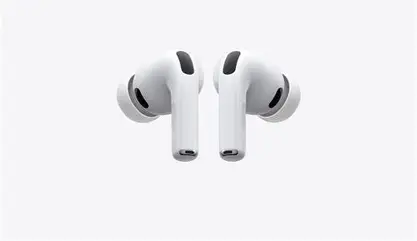
- The choice of the expert: The AirPods Pro 3 are aimed at demanding athletes, frequent travelers, and users requiring absolute isolation and advanced health features (PPG). The doubled battery life and the precision of the U2 chip make it a lasting investment.
Concretely, the price drops observed on platforms like Amazon make the Pro 3 particularly competitive against new releases. Finally, whatever your decision, be sure to keep your devices updated with the latest firmware to enjoy the constant optimizations of the H2 chip and noise reduction algorithms.