
%20(1).png)
Xiaomi Smartwatch Buyer's Guide 2026: Navigating the Catalog
In 2026, Xiaomi's wearables lineup has reached an impressive level of maturity, but it requires careful reading to ensure you choose the right model. The brand has clarified its strategy by dividing its catalog into two distinct paths: on one hand, full app ecosystem support under Google Wear OS for users seeking maximum features; on the other hand, extreme battery endurance powered by HyperOS for those who refuse to charge their watch every other day. This year also marks a technological leap with the widespread adoption of silicon-carbon (Si-C) batteries. This stacked-cell technology increases energy density by 10% in rounded cases, finally delivering the battery life that high-end smartwatches have historically lacked.
Here is our analysis to help you decode which model fits your needs.
Xiaomi Watch 5: The Wear OS Shift and the End of Battery Life Compromise
With the Watch 5, Xiaomi makes its grand return to Google's ecosystem for the international market. The goal is clear: offer a viable alternative to industry leaders by providing native access to the Google Play Store. This integration allows users to install third-party apps like Spotify or Strava, and use Google Wallet and Google Assistant (Gemini) smoothly.
Technically, the device is impressive. Housed in a 47mm stainless steel 316L case, the watch features a 1.54-inch AMOLED display (480 x 480 px). Its 1,500 nits brightness ensures perfect legibility, while sapphire glass provides excellent scratch resistance. Under the hood, it features a dual-chip architecture: a Snapdragon W5 Gen 1 for heavy processing tasks and a BES2800 co-processor for background process management.
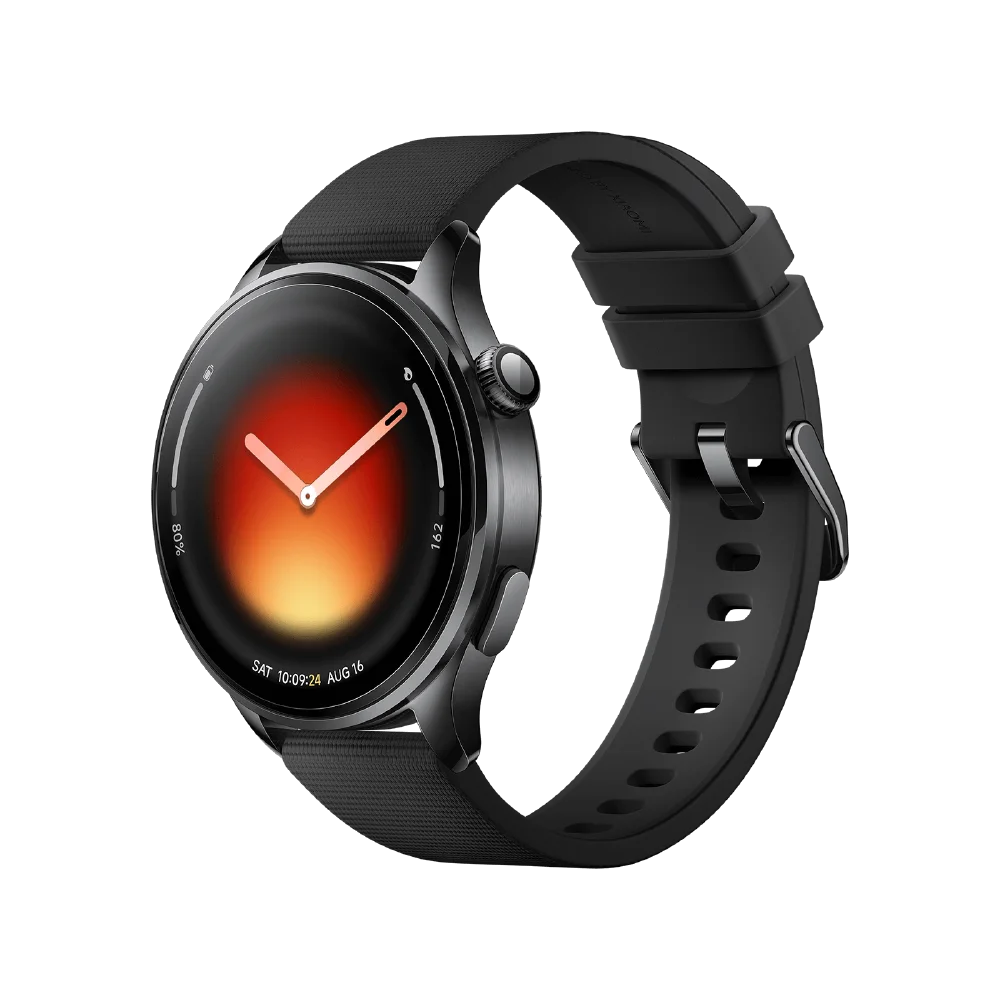
The true quantum leap lies in the 930 mAh Si-C battery. While Galaxy Watches or Pixel Watches struggle to exceed two days, real-world tests confirm that the Xiaomi Watch 5 reaches 5 to 6 days of actual battery life in smart mode. Note, however, a technical quirk: switching between Smart mode (Wear OS) and energy saver mode (proprietary Vela OS) forces a watch reboot, resulting in a few minutes of downtime.
Innovation is also present in the new EMG (electromyography) sensor. Capable of detecting forearm muscle activity, it allows you to control the interface using gestures like finger pinches, finger snaps, or wrist rotations. While promising for rejecting calls or triggering the camera shutter, it requires your hand to be parallel to your chest for optimal detection. Price-wise, expect to pay around $390, though eSIM availability varies by market.
Xiaomi Watch S5: Elegance and Endurance for Daily Life
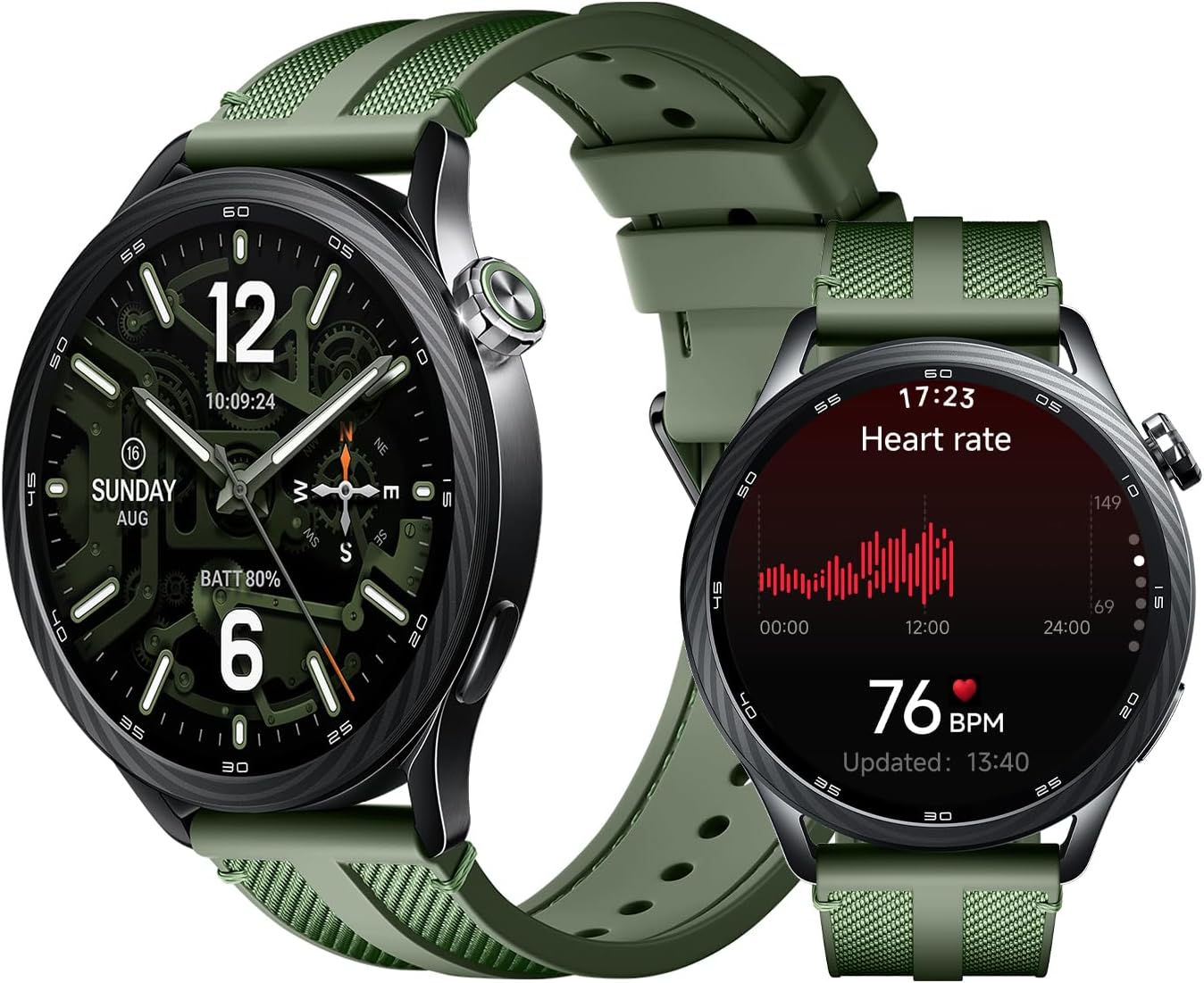
For users who prioritize traditional watch design and premium finishes, the Xiaomi Watch S5 is the top choice. It features a slim, lightweight 316L stainless steel case, complemented by a textured crown and a 1.48-inch AMOLED display hitting a spectacular 2,500 nits brightness for perfect outdoor readability.
Powered by a lightweight, highly optimized operating system, it focuses on fluidity and offers exceptional energy efficiency, delivering a record-breaking battery life of up to 21 days on a single charge. The Watch S5 also features a highly accurate dual-frequency GNSS chip for workout tracking and an eSIM variant for making calls and receiving notifications independently without carrying your phone.
Redmi Watch 6: The Champion of Screen-to-Price Value
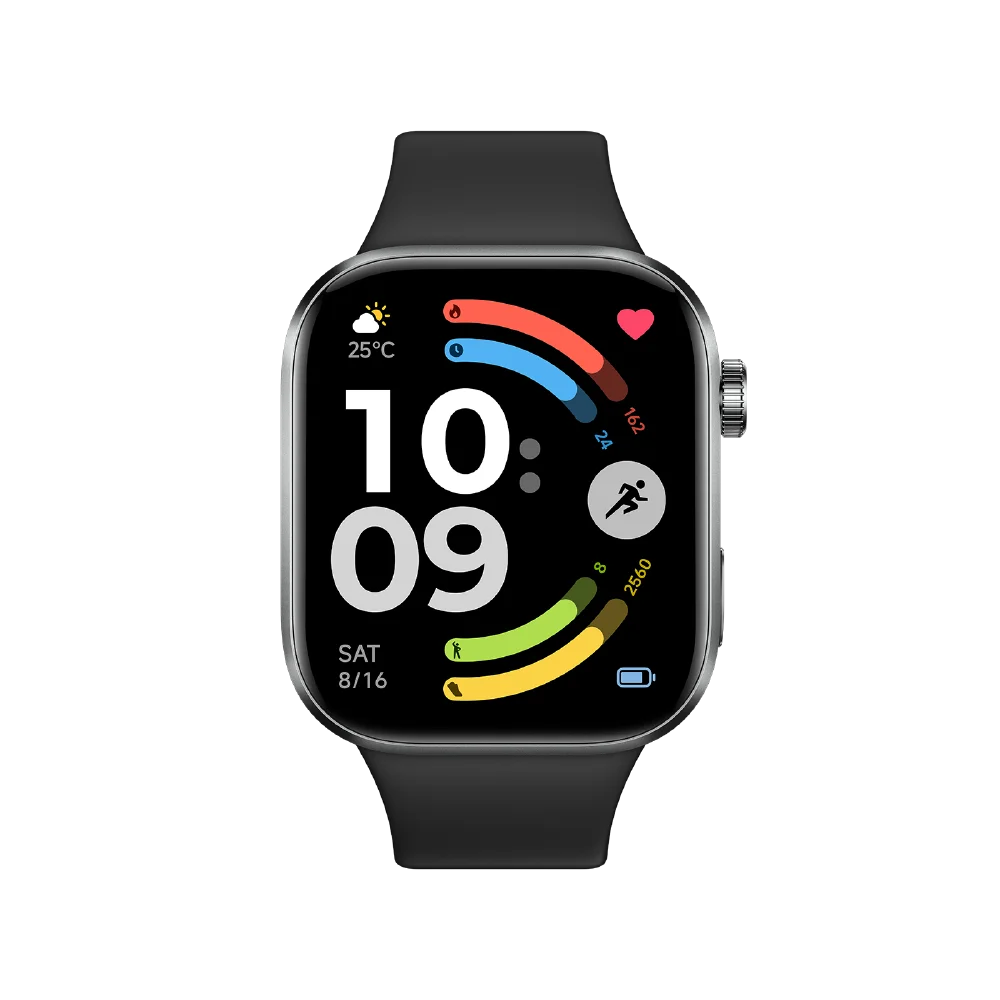
The Redmi philosophy continues to democratize premium technology, using refined materials like its ultra-slim 9.9mm aluminum alloy casing. The Redmi Watch 6 makes a strong impression with a massive 2.07-inch AMOLED display, with brightness boosted to 2,000 nits. Offered at a very accessible price, it runs on HyperOS 3, ensuring a responsive interface although it relies on a closed ecosystem (without third-party app installations). For tracking, it now integrates an independent dual-band GNSS system (L1-L5), which significantly improves route accuracy during outdoor runs. Finally, it excels in endurance, with a battery capable of lasting 12 days in normal use and up to 24 days in light use.
Technical Summary: Comparing the Lineup
Here is a comparison of raw specs without the marketing fluff.
| Model | Operating System | Real Battery Life | Unique Sensor | Indicative Price |
|---|---|---|---|---|
| Xiaomi Watch 5 | Wear OS 6 / Vela OS | 5 to 6 days | EMG (Muscle Gestures) | $390 / €273 |
| Xiaomi Watch S5 | HyperOS 3 | Up to 21 days | Dual-band GNSS + Maps | $280 |
| Redmi Watch 6 | HyperOS 3 | Up to 24 days | Dual-band GNSS (L1-L5) | €100 |
Our Verdict: Which One to Choose According to Your Profile?
Xiaomi's 2026 segmentation meets a clear variety of uses:
- The Tech Enthusiast: The Watch 5 is the clear choice. It is the only model offering the complete Wear OS ecosystem and Google Gemini integration, without sacrificing battery life thanks to Si-C technology.
- The Elegant Pragmatist: The S Series is the way to go. Choose the S5 to forget about the charger, or the S4 41mm for style first, even if it means accepting a shorter 4-day battery life.
- The Budget Buyer: The Redmi range remains unbeatable for its screen size and price. It's a great entry point, provided you accept a basic interface and slightly basic GPS performance in dense cities.
Xiaomi's 2026 wearables portfolio demonstrates a clear goal to move beyond a simple budget option to become a primary technological alternative.