
%20(1).png)
Complete Guide 2026: Which Garmin Smartwatch Should You Choose?
Garmin Ecosystem Evolution: A Strategic Convergence
In 2026, Garmin commands unprecedented software authority in the wearables market. The brand has orchestrated a systematic retreat from the ultra-competitive $400-$499 price segment, leaving it to tech giants like Apple and Google. This strategic pivot focuses on 'margin density': Garmin is focusing on high-value products, unified under the Garmin OS architecture. This shared platform allows for the immediate distribution of advanced algorithms across all product ranges, radically transforming the user experience through a standardization of high-end components.
Key updates to the 2026 lineup include:
- Widespread adoption of high-resolution AMOLED displays.
- Systematic integration of built-in LED flashlights (white and red).
- Standard dual-frequency GNSS (SatIQ) for centimetric GPS tracking accuracy.
- Implementation of advanced recovery and circadian health algorithms across all models.
For the user, this technical homogeneity means that satellite precision and everyday comfort are no longer premium upgrades, but the minimum baseline. This shift sets the stage for the brand's new flagship: the fēnix series.
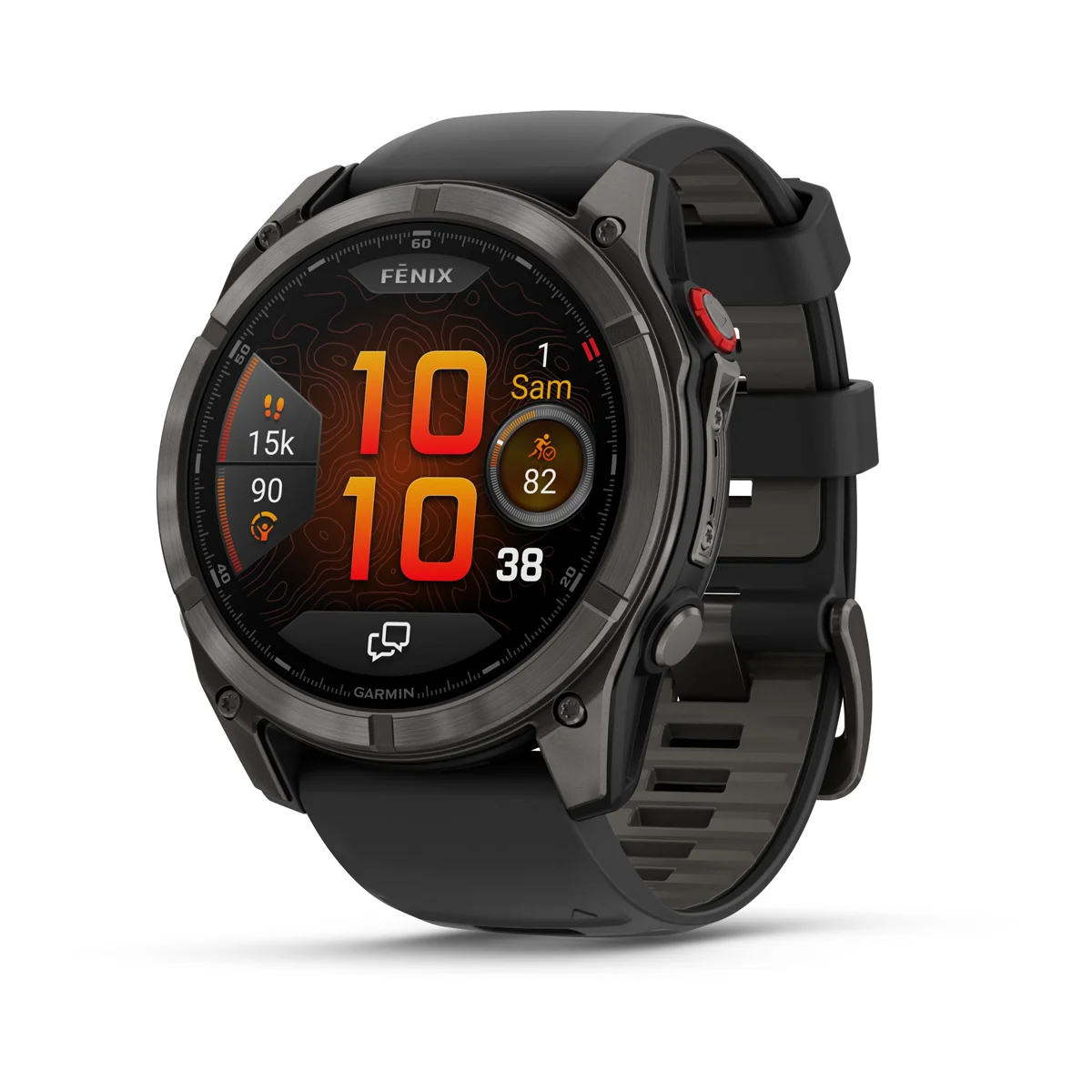
Garmin fēnix 8 Pro: The Communication and Display Titan
The fēnix 8 Pro serves as a showcase of raw hardware power, marking a historic milestone with the introduction of MicroLED. Unlike AMOLED, this display—composed of 400,000 individual LEDs—delivers a phenomenal peak brightness of 4,500 nits and completely eliminates the risk of screen burn-in, while offering superior viewing angles in direct sunlight.
The 51mm MicroLED model is massive, measuring 17.5mm in thickness. While its total weight is 93g, the case alone weighs 68g (compared to 65g for the AMOLED version), a weight that is noticeable on long runs. Garmin justifies this bulk with outstanding critical communication features:
- LTE connectivity and two-way satellite messaging via the Skylo network.
- Segmented inReach plans: Enabled ($7.99), Essential ($14.99), Standard ($29.99 with 30-day trial included), and Premium ($49.99).
- Leakproof inductive buttons certified for recreational diving down to 40 meters.
Despite a price tag that we consider premium, it is the ultimate survival tool. However, its bulk on the wrist remains a drawback for those seeking agility. For them, the Forerunner series offers a more precise athletic focus.
Garmin Forerunner 970 and 570: Biometrics Sized for Performance
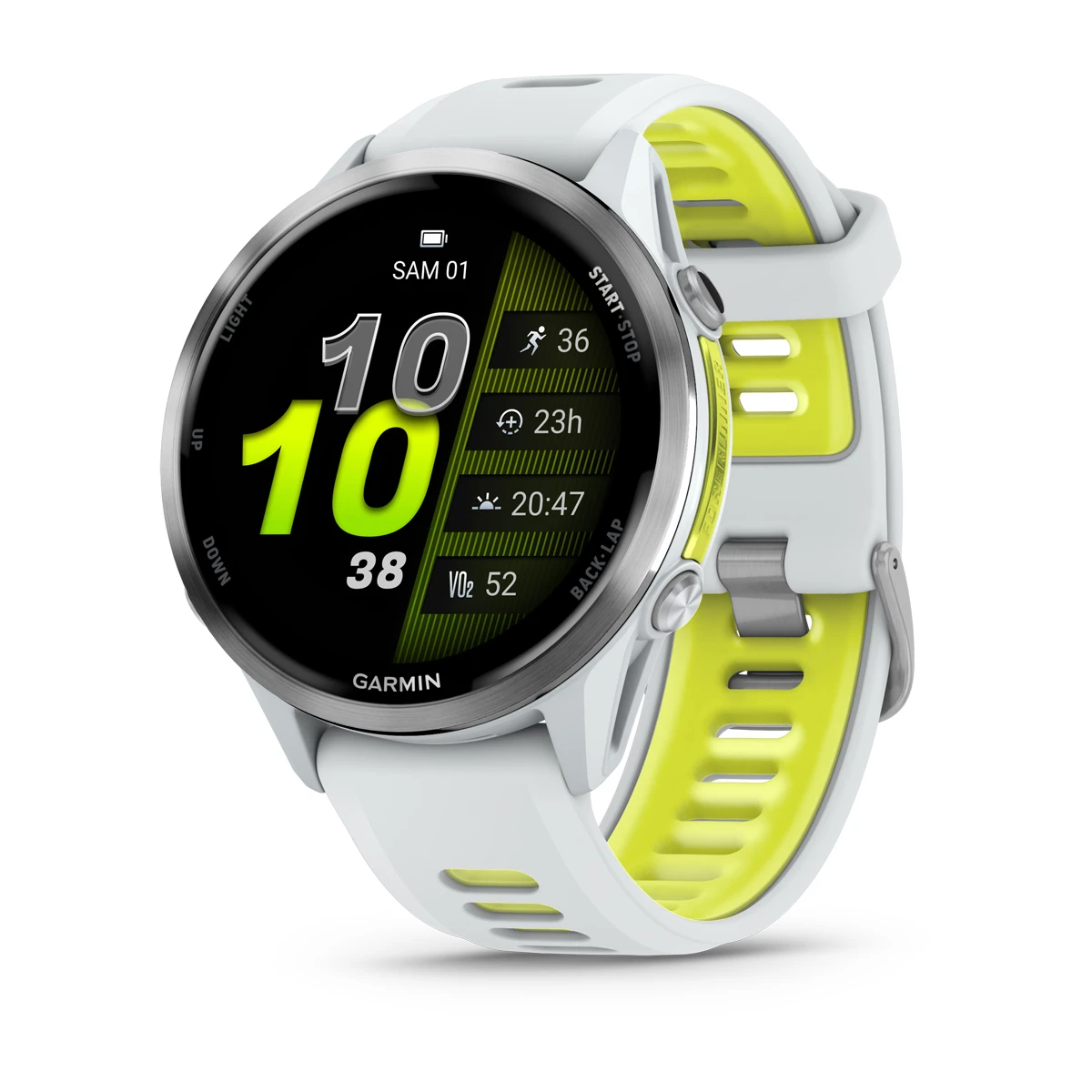
In 2026, Garmin simplified its naming convention by removing the '5' suffix (as optical sensors have become the universal standard). The Forerunner 570 represents an aggressive step up from the older 200 series, positioning itself as a true multisport platform.
The choice between the two models rests on a strict hardware segmentation:
- Forerunner 970 ($749): Titanium chassis, sapphire glass, ECG sensor, built-in LED flashlight, and TopoActive mapping (32 GB).
- Forerunner 570 ($549): Aluminum bezel, Gorilla Glass 3, no flashlight, no ECG, and breadcrumb-only navigation (8 GB).
On the data side, the 970 introduces metrics of unprecedented precision. Running Tolerance translates a route's topography into 'Impact Load' (flat-equivalent load). Even more crucial, Running Economy and Step Speed Loss metrics help anticipate musculoskeletal fatigue by measuring deceleration at impact. Note, however, that these two features strictly require the HRM 600 chest strap. There is also a frustrating hardware limitation: both watches are capped at 2 simultaneous Connect IQ data fields. For harsh environments where electronics must take a back seat, the Instinct remains the rugged alternative.
Garmin Instinct 3: Unlimited Battery Life and Raw Ruggedness
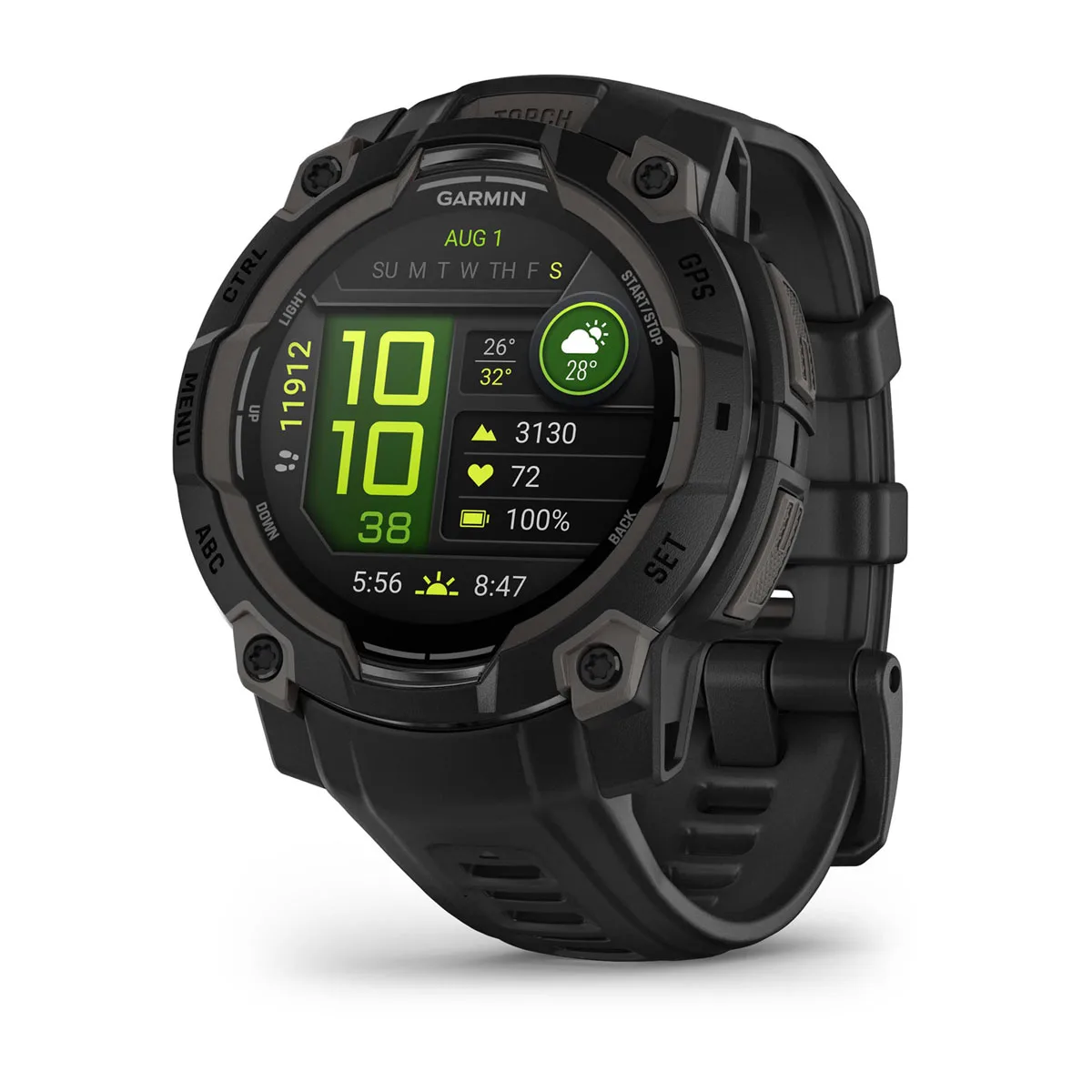
The Instinct 3 rejects touchscreen convenience to ensure absolute reliability in extreme conditions via its five physical buttons. The lineup is now split between the visual comfort of AMOLED (with animated muscle maps) and the energy efficiency of the Solar (MIP) model.
The Solar version remains the reference for long-distance adventure. Thanks to its Power Glass, it achieves unlimited battery life in smartwatch mode, provided it receives 3 hours of daily exposure to 50,000 lux. To maintain an entry price of $399, Garmin makes notable concessions:
- Elevate Gen 4 sensor (no ECG or skin temperature monitoring).
- Breadcrumb navigation only (no full mapping).
- No Wi-Fi or local music storage.
We also advise caution regarding the Instinct E at $299: this model has been downgraded to a single-band GPS system, which is a regrettable regression for an outdoor watch in 2026. For urban use, Garmin offers a more elegant yet technical solution.
Garmin Venu 4 and Venu X1: Premium Design Without Technical Compromise
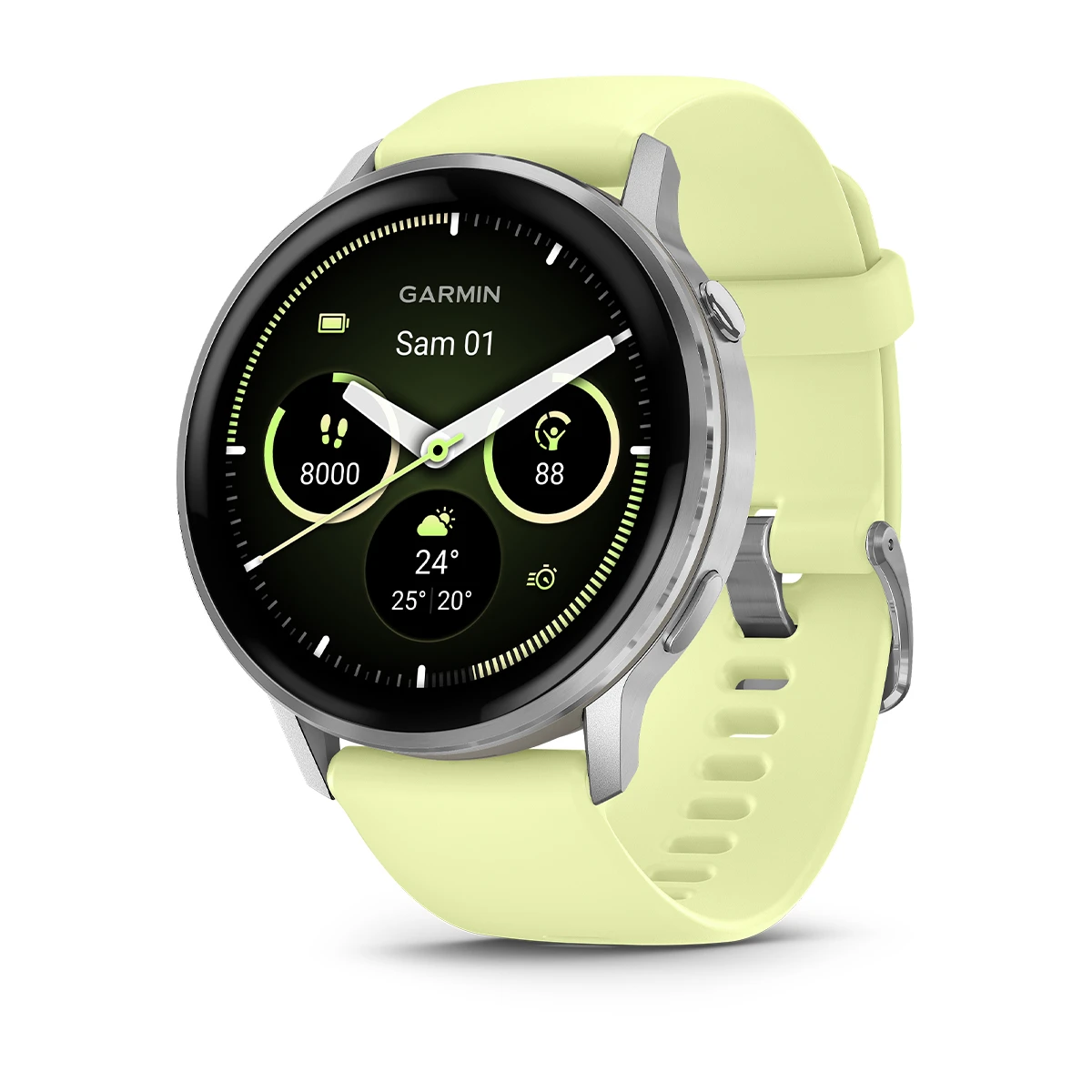
The Venu 4 directly targets the Apple Watch with a higher price tag of $549. This $100 price jump is justified by the addition of the built-in LED flashlight and multi-band GNSS. It introduces Sleep Alignment for circadian tracking but drops its third physical button in favor of a 'touch-first' interface. This is where the segmentation lies: you choose the Venu 4 for its dominant touch screen, or the Forerunner 570 for its button-driven interface at the same price.
The true curiosity is the Venu X1. With a square format of just 7.9mm in thickness and a titanium case, it is the first Garmin compatible with Qi wireless charging. It includes TopoActive maps, but its slimness introduces a technical paradox: it uses a basic 'All-Systems GNSS' receiver (no multi-band) and, despite its Elevate Gen 5 sensor, it does not support ECG. At $699, it is a design choice that sacrifices absolute satellite precision.
Technical Specifications Summary
Here is the comparison of Garmin's flagship models in 2026.
| Model | Price (MSRP) | Display | Heart Rate Sensor | Battery Life (Smartwatch) | Unique Highlight |
|---|---|---|---|---|---|
| fēnix 8 Pro 51mm | $2000 | MicroLED | Elevate Gen 5 | 10 days (4 days AOD) | MicroLED 4500 nits, Satellite |
| Forerunner 970 | $749.99 | AMOLED | Elevate Gen 5 | 15 days | Running Tolerance Diagnostics |
| Instinct 3 Solar | $399.99 | MIP Monochrome | Elevate Gen 4 | Unlimited | Complete Solar Endurance |
| Venu 4 | $549.99 | AMOLED | Elevate Gen 5 | 12 days | Sleep Alignment, LED Flashlight |
Our Verdict: Which Garmin for Your Profile in 2026?
Garmin's premium pricing in 2026 makes previous-generation models, like the Epix Gen 2, highly relevant for tight budgets. However, to benefit from the latest advances:
- The Extreme Adventurer: The fēnix 8 Pro is the only choice for those whose safety depends on autonomous satellite communication and flawless MicroLED readability.
- The Data-Driven Runner: The Forerunner 970 offers the finest biomechanical analysis, provided you invest in the HRM 600 chest strap.
- The Rugged Minimalist: The Instinct 3 Solar remains the standard for infinite battery life and impact resistance.
- The Demanding City User: The Venu 4 is the best compromise of health and safety, while the Venu X1 is for style-focused buyers willing to accept compromises on GPS precision.