
%20(1).png)
Understanding Smart Rings in 2026: The Complete Guide
The Invisible Technology Revolution
In 2026, the wearables industry reached a turning point: the disappearance of the device in favor of the data. Long dominated by the smartwatch, the market has adapted to meet a growing demand for discretion and digital detox. The smart ring is no longer just a niche gadget; it has become the main alternative to the watch. This year represents a shift where extreme miniaturization finally allows medical-grade sensors to fit inside a ring nearly indistinguishable from classic jewelry.
This shift from wearable to invisible technology addresses a widespread digital fatigue. Our long-term tests confirm that the 2026 user wants to track health metrics continuously without constant notification alerts and the glare of wrist-bound OLED screens. The ring becomes the quiet anchor of health tracking, masking a micro-engineering masterpiece under its elegance.
Design and Ergonomics: A Second Skin
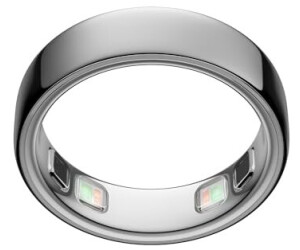
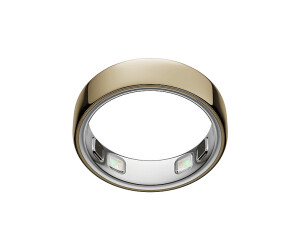
Esthetic development between 2024 and 2026 has been fast. The bulky designs of early models have given way to record thinness. The Oura Ring 5, leading this generation, is 40% thinner than the Gen 4, with a thickness of just 2.28 mm and a width of 6.09 mm. Material-wise, the industry has adopted luxury watch standards, using Grade 4 Titanium and physical vapor deposition (PVD) coatings for scratch resistance. New shades like Deep Rose and Gold blend seamlessly with traditional jewelry.
The comfort improvement is significant. A 2026 ring weighs between 2g and 2.7g, compared to a watch like the Galaxy Watch 8 Classic at 63.5g. This weight difference changes the user experience: the lack of wrist clutter allows for 24/7 wear, which is especially critical for sleep analysis.
Health and Well-being: A Lab on Your Finger
Because of the close proximity of the sensors to the blood vessels in the fingers, measurements are now more consistent than those taken at the wrist. In 2026, the smart ring has become an essential tool for preventive health.
Standard Biometric Capabilities in 2026:
- Heart Rate and HRV: Continuous heart rate variability tracking to evaluate stress.
- Blood Oxygen (SpO2): Saturation tracking to detect breathing anomalies.
- Skin Temperature: Overnight variation monitoring to predict hormonal cycles or illnesses.
- Cycle Tracking: Predictive algorithms based on temperature and heart rate.
- Sleep Apnea Detection: Through a strategic partnership with ResMed, rings now analyze nocturnal breathing disturbances with clinical precision.
Sensor optimization is the real breakthrough. On the Oura Ring 5, LEDs were reduced from 18 to 12. Far from reducing accuracy, this change improves it: low-profile sensor domes ensure a more direct and stable contact with the skin, eliminating movement artifacts.
| Feature | High-Performance Ring (e.g., Oura 5) | Smartwatch (e.g., Galaxy Watch 8) |
|---|---|---|
| Sensor Tech | 12 LEDs + Low-profile domes | Up to 18 LEDs + Flat sensors |
| Sleep Accuracy | Excellent (deep passive tracking) | Good (sometimes hindered by weight) |
| Activity Tracking | Auto-detection (via Phone Health app) | Built-in GPS (real-time standalone) |
| AI Coaching | Predictive AI (Readiness/Energy Score) | Active AI (Guided workouts) |
Beyond hardware, the main story of 2026 is data synthesis using AI (Galaxy AI, Oura Advisor). Data is no longer presented as raw numbers, but as actionable advice via the Energy Score: the system suggests immediate rest or an intense workout based on your actual recovery status.
The Matchup: Smart Ring vs Smartwatch
Choosing between these two form factors depends on your preference for performance or recovery. The smartwatch remains the ultimate tool for sports performance. With its screen, it offers real-time heart rate feedback during workouts and distance tracking via built-in GPS. The smart ring, however, excels in passive monitoring.
The lack of a screen on the ring is its greatest strength: it is a tool for disconnecting. However, it makes you dependent on your smartphone to view stats. While the ring displays less information on the go, it wins hands down on battery life and energy efficiency.
Battery Life and Power: No More Charging Anxiety
Rings in 2026 set a new standard for battery life. While a watch often requires daily charging, models like the Oura Ring 5 now offer 6 to 9 days of use, and the RingConn Gen 2 can reach 12 days on larger sizes.
Innovation also covers charging. Travel cases, capable of holding up to 20 full charges, let you travel for months without a power cord. Even more impressive, payment-only rings like RingPay use NFC terminal energy (energy harvesting) to operate. Powered by platforms like Fidesmo or Curve, these rings have no battery. It is the ultimate "slip it and forget" experience: no maintenance, no charging, and instant availability for transactions.
Interactions and Gestures: Controlling Your World with a Pinch
The lack of a screen doesn't mean no control. In 2026, the ring acts as a gesture control hub. The Galaxy Ring popularized the double pinch (Double Tap). This gesture lets you trigger the camera shutter on a Galaxy Z Flip or dismiss a morning alarm without touching your phone.
This gesture potential now extends to smart home and security, letting you lock a smart lock or dim lights with a flick of your finger, turning the ring into an invisible universal remote.
Practical Guide: Choosing, Sizing, and Buying
Buying a smart ring requires following a specific protocol:
- The Sizing Kit (Essential): Sizes do not align with standard jewelry. It is crucial to wear the test ring for 24 hours. Our tests show that finger volume changes between day and night or depending on temperature.
- Pricing Model: This is the main point of friction. Oura maintains a monthly subscription fee for advanced data analysis. In contrast, brands like RingConn or payment rings like RingPay favor a one-time purchase model, appealing to users who dislike recurring costs.
- Compatibility: While most rings support Android 11+ and iOS, some AI features (Samsung Health) are optimized for their own ecosystems.
The Future in the Palm of Your Hand
In 2026, the smart ring has transitioned from a gadget to a public health necessity. It marks the start of clinical-grade medical tracking that is both invisible and permanent. The market has divided into two clear paths.
Our Verdict:
- Choose the Smartwatch if your daily life requires active notification management, calls on the wrist, and standalone GPS tracking for sports.
- Choose the Smart Ring if you want absolute discretion, ultra-precise recovery analysis (sleep/stress), and want to reduce screen time.
The future belongs to this technology that knows how to stay in the background to protect us.