
.png)
Galaxy Ring Review: Health Revolution on Your Finger or Luxury Gadget?
Invisible Computing Era: Beyond Smartwatches
With the Galaxy Ring, Samsung is not merely launching a new product—it is initiating a strategic shift toward invisible computing. While the Galaxy Watch paved the way, it remains an ostentatious device that imposes its presence on the wrist. The ring, on the other hand, promises to fade into the background to make room for transparent, continuous biological data collection. This format is particularly relevant for sleep tracking: where a watch can feel bulky or uncomfortable during the night, the ring is easily forgotten while guaranteeing constant, optimal skin contact for sensors. Priced at a steep €449, Samsung is setting the bar high. It remains to be seen whether this miniaturization feat justifies a price tag higher than that of a Galaxy Watch 7, which is nevertheless much better equipped.
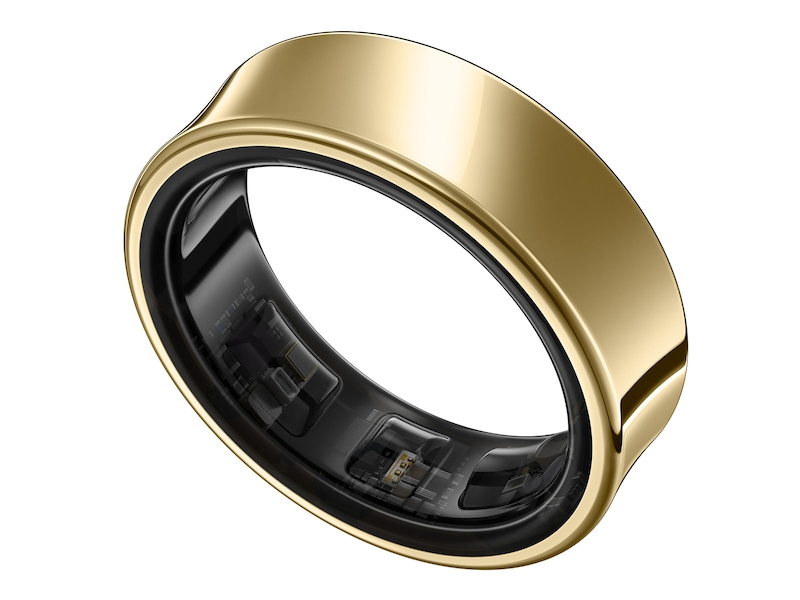
Design & Materials: Grade 5 Titanium Craftsmanship
For a device worn 24/7, durability is the ultimate battleground. Samsung opted for a titanium alloy, betting on a concave design intended to reduce friction. With a featherweight ranging between 2.3 and 3 grams, comfort is undeniable: the ring truly ends up being forgotten. However, do not be fooled by the Titanium label: visually, the ring remains thick and wide compared to a traditional ring—a volume necessary to house the electronics, but one that can be surprising.
Real-world feedback is less flattering than marketing renders. Hands-on reviews from testers like GIGATOP or Rudy (Avis Mobiles) are clear: the Titanium Black and Titanium Gold finishes show wear quickly. The coating is prone to micro-scratches, especially during daily or sports activities. In this regard, Samsung formally advises against wearing the ring for weightlifting (dumbbells, barbells), not only to preserve the finish, but also to avoid hand injuries from compression. Regarding water resistance, the 10 ATM and IP68 certifications permit showering and swimming in fresh water, but strictly forbid deep diving or high-pressure water sports.
Sizing Protocol: Why Fit is Critical
Proper fit is the indispensable condition for biometric accuracy. A ring that is too loose leaves sensors blind; too tight, it restricts circulation. Samsung therefore enforces a sizing kit procedure. It is imperative to wear the sample ring for at least 24 hours. Why? Because the volume of your finger changes radically between waking up, physical exertion, or a hot day.
The ring comes in 9 sizes (from 5 to 13). For optimal accuracy, Samsung recommends prioritizing the index finger, as it offers the best contact surface for internal sensors. Take your time: a poor size choice at the start will render your €449 investment entirely useless.
Sensors & Galaxy AI: Biomarker Intelligence
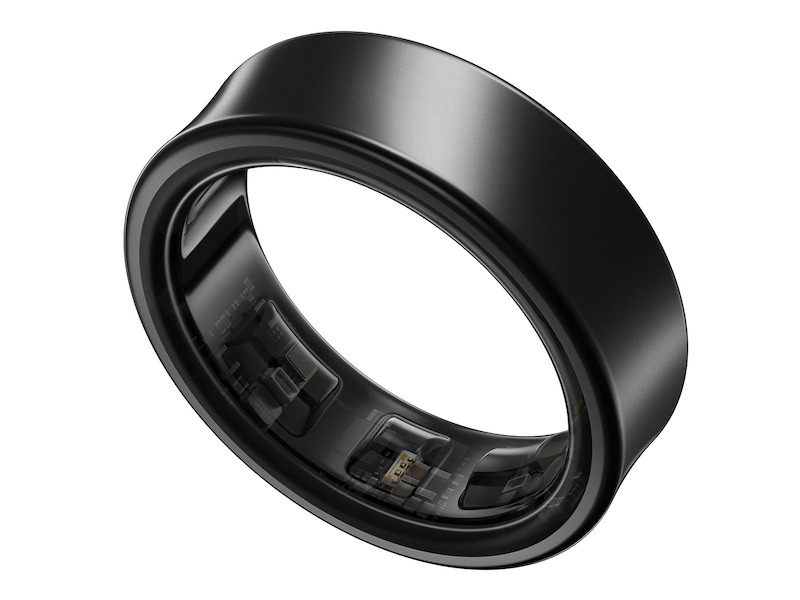
Successfully packing a suite of sensors into a wall thickness of just a few millimeters is an engineering tour de force. It includes:
- An accelerometer (movement and automatic detection of walking/running).
- A skin temperature sensor (overnight thermal analysis).
- An optical bio-signal sensor (PPG) for heart rate.
This data powers the Energy Score, a Samsung AI-managed synthesis that evaluates your recovery by cross-referencing sleep, activity, and heart rate variability (HRV). While heart rate accuracy is excellent (around 2 beats difference compared to a chest strap according to CNET), the ring shows its limits during high-intensity workout sessions (HIIT) where a watch remains superior.
However, we must highlight two unforgivable omissions at this price point: the Galaxy Ring features neither an NFC chip for contactless payments nor a haptic feedback motor. No vibrations for your alarms or notifications: you will have to keep your eyes fixed on your smartphone for every alert.
Samsung Health Ecosystem: No Monthly Subscription Fees
The Galaxy Ring is a pure ecosystem product. Let us be sharp: it is completely incompatible with the iPhone. For Android users (version 11 minimum), the Samsung Health application is indispensable, but the most advanced features like the Energy Score or personalized advice imperatively require a Samsung Galaxy smartphone with Galaxy AI enabled.
The double pinch gesture feature, which allows you to trigger the camera or silence an alarm by tapping your thumb against your index finger, is indeed magical, but restricted to smartphones running One UI 6.1.1 or higher. The only real killer argument against Oura remains the absence of a monthly subscription: once paid, your data belongs to you without additional recurring fees.
Battery Life & Portable Charging Case
For a health tracker, battery life is crucial. Take note of this technical nuance: sizes 12 and 13 last up to 7 days, whereas smaller sizes (5 to 11) cap at 6 days. In real-world usage, expect around 5 days if all continuous tracking features are enabled.
The charging system is exemplary. The translucent case with its LED ring is far more practical than competitors proprietary charging docks. The ring recharges to 100% in about 80 minutes. An extra detail: if you run out of battery far from a wall outlet, you can recharge the case wirelessly via the PowerShare feature on the back of your Samsung Galaxy smartphone.
Comparative Analysis: Galaxy Ring vs Competitors
The market did not wait for Samsung to mature. Here is where the Korean ring stands:
| Model | Price | Subscription | OS Compatibility | Key Advantage |
|---|---|---|---|---|
| Samsung Galaxy Ring | €449 | None | Android (Samsung required for AI) | Ecosystem & Charging Case |
| Oura Ring 4 | Approx. €399 | Required (€5.99/mo) | iOS & Android | Proven Algorithms & Precision |
| RingConn Gen 2 | Approx. €299 | None | iOS & Android | Record Battery Life & Sleep Apnea |
| Ultrahuman Ring Air | Approx. €349 | None | iOS & Android | Metabolism Focus & No Subscription |
Real-World Durability & Serviceability
Buying the Galaxy Ring today means accepting being an early adopter with the risks that entails. On Reddit (r/SmartRings), critical testimonials are accumulating. Some users report total sensor failures after only a few weeks of use.
Even more concerning, Samsung customer service seems to struggle with this niche product. One documented case details a ring sent in for repair due to dead sensors, returned to the customer with an additional bug: a total impossibility to establish a Bluetooth connection. Many buyers run into unjustified out of warranty diagnostics for nearly new products or endless under review refund processes. This is a major black mark for a €450 object.
Our Verdict: Who Should Buy the Galaxy Ring in 2026?
Points Forts:
- Record comfort and lightness (2.3g).
- No monthly subscription fee.
- Highly refined charging case with PowerShare support.
- Accurate health measurements (sleep and resting HRV).
Points Faibles:
- Prohibitive price (€449).
- No NFC payments or haptic vibration motor.
- Total incompatibility with iOS.
- Titanium finish prone to micro-scratches.
- Uncertain customer support and early hardware bugs.
Final Recommendation: The Galaxy Ring is an impressive piece of technology for a Samsung user seeking passive, discreet health tracking. However, the absence of basic features (contactless payment, vibrations) and doubts regarding long-term reliability make the bill very difficult to swallow. Unless you are a die-hard early adopter, waiting for a second generation—more robust and feature-rich—seems to be the voice of reason.