%20(1).png)
Signify Smart Plug Ecosystem in 2026: Philips Hue vs WiZ Matchup
Redefining "Non-Connected" Objects
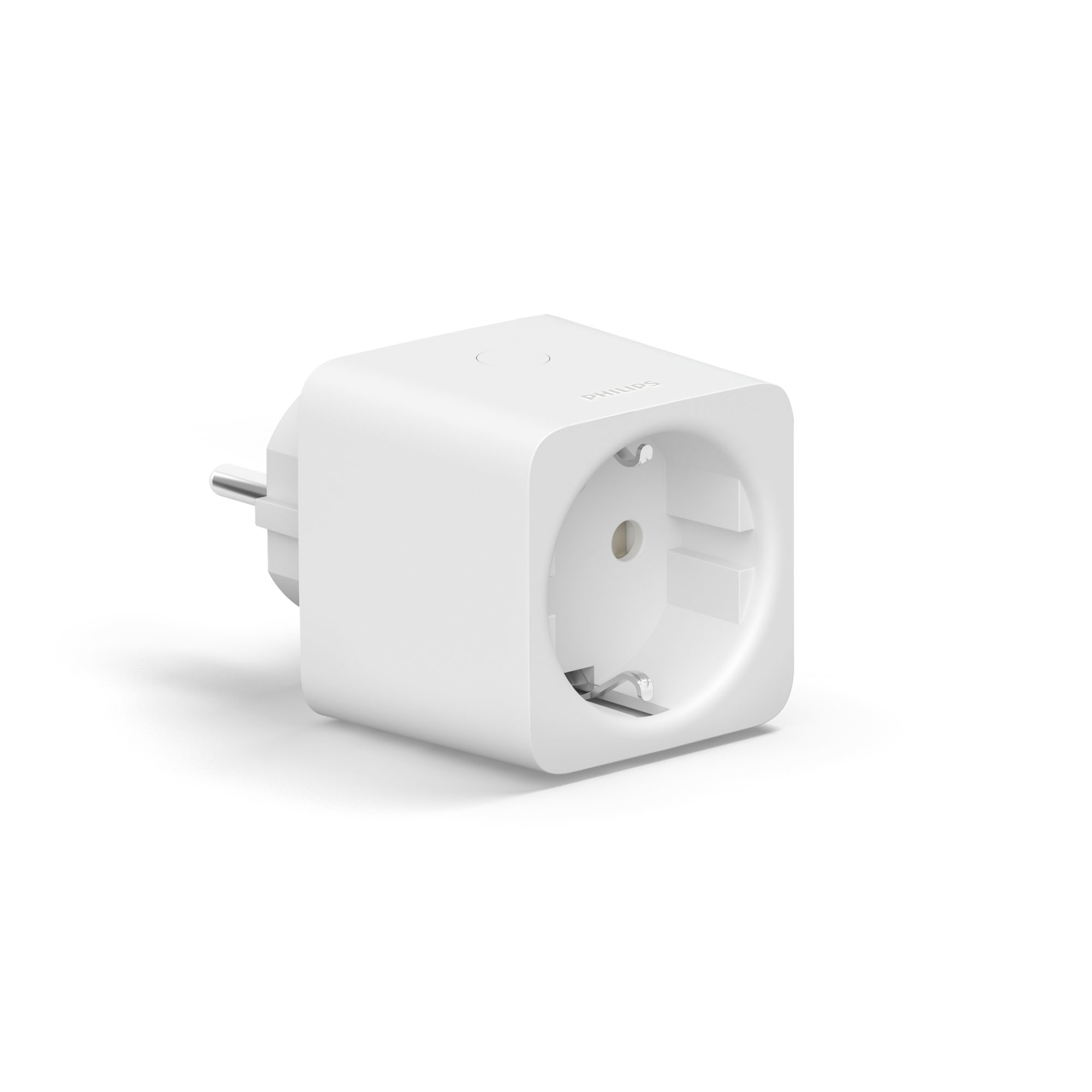
The smart plug has become a cornerstone for connecting traditional electrical appliances to modern smart home intelligence. Signify offers two complementary lines: Philips Hue represents the premium ecosystem based on the stable Zigbee protocol, while WiZ Connected focuses on direct Wi-Fi accessibility and the universal Matter standard.
Plugging a traditional table lamp or fan into a smart plug allows you to automate it easily and integrate it into your daily schedules without replacing your existing electrical devices.
Philips Hue Smart Plug: Stability and Premium Integration
The Philips Hue plug does more than just switch devices on or off. It acts as an essential node for your smart home network. When plugged in, it functions as a signal repeater to boost the range and stability of your Zigbee mesh network.
Key Features
- Hybrid Connectivity: Works via Bluetooth (direct control) and Zigbee through the Hue Bridge for full smart home control.
- Advanced Features: Using the bridge unlocks out-of-home control, scheduling, and integration with other sensors.
- Power-on Behavior: You can configure the plug's state after a power outage (return to last state, turn on, or stay off).
Why Use It Only for Lighting?
Although the plug can physically handle high-wattage appliances, Signify officially advises using it only for light fixtures. Inside the Hue app, it is treated as a virtual bulb. Without energy monitoring or dimming features, it risks turning off by accident during a general 'turn off all lights' command if you plug a fan or coffee machine into it. For appliance energy tracking, the WiZ range is a better fit.
The WiZ Connected Alternative: Versatility and Energy Monitoring
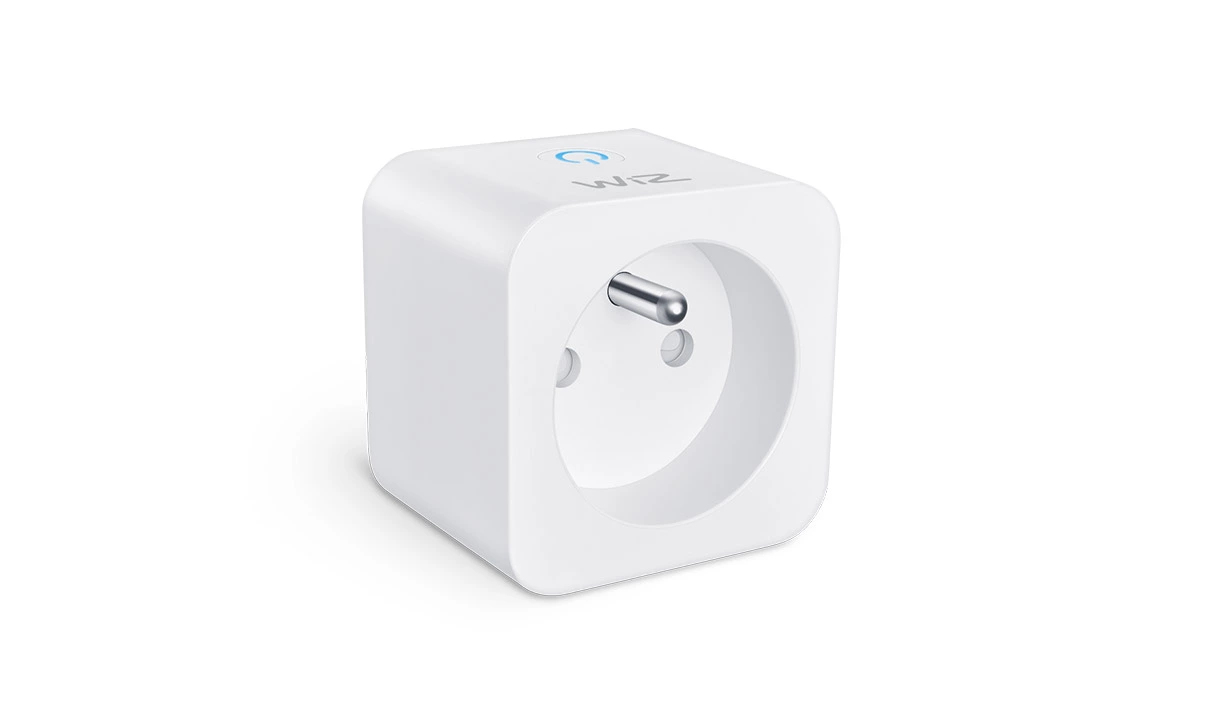
WiZ offers a highly practical decentralized approach. Using direct Wi-Fi connection, it requires no bridge to operate. It is the ideal option for controlling various household appliances independently.
WiZ Strong Points
- Energy Tracking: Unlike Hue, the WiZ plug features active power monitoring to track consumption in real time and view history in the app.
- SpaceSense: Allows using Wi-Fi signal disruptions to detect motion. Note that this feature requires at least two compatible WiZ devices in the same room to work.
- Matter Support: WiZ supports the Matter protocol for easy integration with Apple Home, Google Home, or Alexa.
Limits and Safety
A few points of caution apply to the WiZ model. The status displayed in smart assistant apps (Google Home/Alexa) can sometimes fall out of sync with the physical relay (showing off when the plug is actually on). Be cautious when plugging in heating appliances like hair straighteners. Additionally, its maximum recommended operating temperature is +35°C, so avoid highly confined spaces.
Matter, Thread, and the Future of Interoperability
The smart home market is moving toward separating the application layer (Matter) from the transport protocol (Thread). Signify adapts with the Hue Bridge Pro, allowing users to manage over 150 lights and 50 accessories with enhanced security.
Compared to a centralized Zigbee network built around a hub, the Thread protocol (used by brands like Eve) offers a decentralized, self-healing IP mesh network without requiring a proprietary hub. For large-scale setups, Thread's IP infrastructure remains the most future-proof option.
Conclusion: Which Model to Choose?
- Philips Hue: Recommended for users already invested in the Hue ecosystem. This is the choice of absolute stability for lighting and for those who require a perfect aesthetic integration without saturating the Wi-Fi network.
- WiZ Connected: The best value for money (11€-21€) for controlling utility appliances (fans, coffee makers) and for those who wish to monitor their electrical consumption without investing in a bridge.
- Thread Alternative (Eve Energy): For interoperability purists looking for a "future-proof" setup under Matter, without dependency on a single proprietary hardware.
Note on durability: Signify recalls the importance of recycling. At the end of their economic life, these products must not be disposed of with household waste but treated according to local channels to prevent any health and environmental impact.