
%20(1).png)
Ray-Ban Smart Glasses: The Great Leap to Gen 2 and the Arrival of Oakley
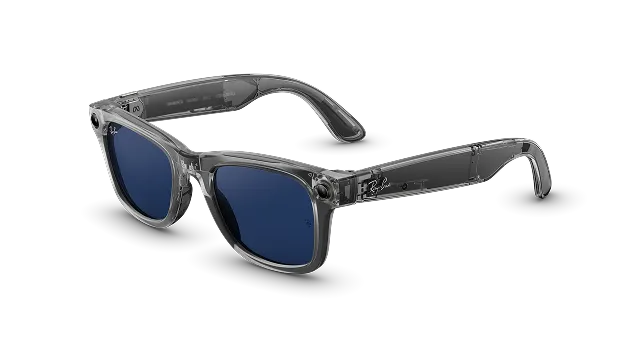
The evolution of Meta's smart glasses marks a turning point: the transition from the experimental "Stories" gadget to a performance tool with Gen 2 (Ray-Ban Meta). This strategic shift, the result of close technical collaboration between Meta and EssilorLuxottica, positions wearables no longer as social media accessories, but as cutting-edge computer terminals worn on the face. This hardware and software maturity redefines market expectations while highlighting the persistent physical limitations of miniaturized components.
Anatomy of an Upgrade: Specs and Raw Performance
The generational leap relies on the integration of Qualcomm's Snapdragon AR1 Gen1 platform. This processor is not a simple update; it is the engine required for high-resolution image processing and the execution of multimodal artificial intelligence.
In practice, upgrading from a 5 MP sensor to a 12 MP camera changes everything. While the first generation produced noisy images suitable only for ephemeral sharing, Gen 2 provides sufficient clarity for semi-professional Point of View (POV) work. The decupled internal storage and the addition of Wi-Fi 6 make it possible to manage these heavier data streams without instantly filling the smartphone's memory.
| Feature | Ray-Ban Stories (Gen 1) | Ray-Ban Meta (Gen 2) |
|---|---|---|
| Photo Resolution | 5 MP (2592 x 1944 px) | 12 MP (3024 x 4032 px) |
| Video Quality | 1184 x 1184 @ 30 fps | 1080p @ 60 fps / 3K @ 30 fps |
| Storage | 4 GB (approx. 500 photos) | 32 GB (1000+ photos) |
| Processor | Qualcomm Snapdragon (optimized) | Snapdragon AR1 Gen1 |
| Connectivity | Wi-Fi 802.11ac / Bluetooth 5.0 | Wi-Fi 6 / Bluetooth 5.3 |
This technical power surge allows Meta to address the highly demanding sports sector with the introduction of the Oakley brand into its ecosystem.
The Athletic Turn: Focus on Oakley Meta Vanguard and HSTN
The arrival of Oakley marks a clear intent to appeal to cyclists and runners. Two models share this segment: the Vanguard and the HSTN. The Vanguard adopts a 68g "shield" (single lens) design, offering maximum protection and an immersive 122° field of view. Conversely, the HSTN is a lighter, more urban model (53g) with a 100° FOV. A crucial distinction for prescription wearers: the HSTN is compatible with prescription lenses, which is not the case for the Vanguard.
Why does this change everything for an athlete? Unlike the Ray-Ban where the cameras are on the side, the Vanguard places its sensor in a central position, above the nose. This guarantees perfect alignment between the athlete's gaze and the recording. However, a major limit remains for videographers: the Vanguard captures exclusively in portrait (vertical) format. This social-first choice restricts usage for classic landscape productions. Despite the excellence of the Prizm Road lenses and IPX4 certification, this high-end gear faces a physical reality: battery life.
The Trial of Reality: Battery Life, Audio, and Daily AI
While marketing promises up to 8 or 9 hours of use, independent tests (RTINGS, road.cc) reveal a true Achilles' heel: the battery runs out in just 90 minutes during continuous audio playback. Under real mixed usage, the user should expect shutdown after 3 or 4 hours. This is the price to pay for the lack of direct wiring, with the charging case remaining the only way to refuel.
Clearly, while the audio is a success — with a 5-microphone system capable of filtering wind up to 60 km/h — the integrated AI remains in beta. During testing, voice commands showed an irritating fallibility: asking for 90s dance music for an interval workout can result in a Simon & Garfunkel playlist. This software unpredictability shows that the "Hey Meta" assistant is still in active training. However, integration with third-party ecosystems adds real value.
Connectivity and Ecosystem: Garmin and Strava Integration
The Meta AI app (formerly Meta View) acts as the control tower. It allows pairing the glasses with Garmin Edge bike computers (540, 840, 1040 series, etc.). This synergy provides real-time audio alerts on heart rate or pace, allowing the athlete to stay focused on their line.
Even more impressive, the software integration allows the glasses to automatically trigger video recordings during "notable moments" identified by the Garmin computer. The videos can then be enriched via Strava with data overlays (speed, elevation). However, this omnipresence of cameras on the face revives ethical tensions.
Ethics, Privacy, and the Shadow of GDPR
Using a permanent camera remains a hot topic. The notification LED, designed to warn others, is deemed too discrete by regulators. Concerns were validated by a Harvard student experiment that paired the glasses with the PimEyes search engine, successfully doxxing strangers in the street (name, address, phone number) in real time.
In Europe, GDPR and the EU AI Act impose strict restrictions. Meta has already started deploying code related to facial recognition (Wired report, June 2026), placing the firm under close scrutiny by the Irish Data Protection Commission. Using captured images to train Meta's AI models without explicit consent remains the major point of friction with EU authorities.
Should You Buy Into Gen 2?
Gen 2 is a successful but imperfect transition product. For $409 (Ray-Ban) to $499 (Oakley), you get the best POV capture experience on the market, but you accept wearing a device with precarious battery life and sometimes capricious AI.
Should you wait? The question is legitimate. Meta has already announced the Meta Ray-Ban Display for late 2026. Priced at $799, they will integrate a true in-lens display (600x600 pixels, 5000 nits) and a neural band for muscle-gesture control. If you seek an immediate tool for social sharing, Gen 2 is ready. If you dream of true augmented reality, the future lies a step higher, but at a significantly more exclusive price.