
%20(1).png)
Artificial Intelligence on Your Nose: Are Meta Glasses Actually Worth It?
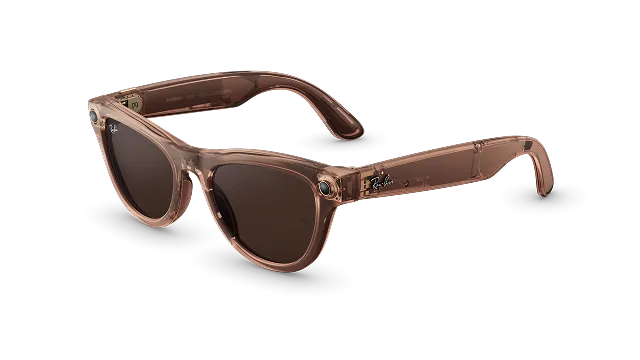
The strategic alliance between Meta and optical giant EssilorLuxottica, spanning iconic brands like Ray-Ban and Oakley, marks a decisive step in the evolution of wearables. What was once just a fashion accessory is transforming before our eyes into a next-generation computing device. By integrating artificial intelligence directly into the frame, Meta is not just offering a hands-free gadget; the company aims to create a human-machine interface capable of understanding and interacting with our immediate environment.

Embedded AI: More Than Just a Hands-Free Gadget
The user experience centers around the "Hey Meta" voice interface, a responsive personal assistant capable of executing complex tasks without physical interaction. The system smoothly handles phone calls, messaging dictation via WhatsApp or Messenger, and music stream control on Spotify or Apple Music.
However, the true technological leap lies in multimodal processing via Computer Vision. Thanks to the built-in camera, the AI can "see" what the user is looking at. It can thus identify objects or translate text in real time — a feature that, on current models, is limited to audio feedback, foreshadowing the visual display of future models. This contextual intelligence positions the glasses as a proactive helper, but this software agility relies heavily on robust hardware architecture.
Technical Architecture: The Engine of Innovation
The major challenge in this product category remains the extreme miniaturization of components without sacrificing ergonomics or computing power. The second generation (Gen 2) takes a leap forward with the integration of the Qualcomm Snapdragon AR1 Gen1 processor. This SoC (System on Chip) powers a platform with 32 GB of internal storage, supporting Wi-Fi 6 and Bluetooth 5.3 for high-speed connectivity needed to transfer heavy media files.
The table below details the performance leaps between the original version and the new iteration:
| Feature | Gen 1 (Stories) | Gen 2 (Meta) |
|---|---|---|
| Photo Resolution | 5 MP | 12 MP |
| Microphone System | 3 micros | 5 micros |
| Streaming Capabilities | Local recording only | Direct livestreaming (FB / Instagram) |
| Internal Storage | Around 4 GB | 32 GB |
| Processor | Optimized Snapdragon | Snapdragon AR1 Gen1 |
These specifications allow for much sharper and more immersive 3K content capture, a feature particularly sought after by demanding users and high-level athletes.
The Oakley Offensive: AI for Sports Performance
With the Oakley Meta HSTN and Vanguard models, Meta is directly targeting the sports performance segment. Here, the AI leaves the social living room to become a genuine training tool. Thanks to deep integration with Garmin and Strava, the glasses provide real-time audio alerts on pace, distance, or heart rate. The athlete can thus monitor their performance without ever taking their eyes off the road.
The Vanguard model perfectly illustrates this technical specialization. While the HSTN model settles for a 100-degree field of view, the Vanguard offers an ultra-wide 122-degree angle, optimized to capture all the action in cycling or running. Despite weighing 68g (compared to 53g for the HSTN), the Vanguard maintains stable ergonomics for high-intensity sports. This evolution towards performance is the first step before the integration of direct visual feedback.
Towards the Future: Monocular Display and Neural Control
The announcement of the Meta Ray-Ban Display, planned for the end of 2025, represents a major technological leap. Unlike current generations, these glasses integrate a monocular display in the right lens, opening the way to a visual interaction with the AI.
- Display Specifications: The screen offers a resolution of 600x600 pixels and a record brightness of 5,000 nits, ensuring perfect readability in direct sunlight. With a 90 Hz refresh rate, it will display visual GPS guidance and message readings in real time. It is on this model that live translation will make complete sense, with text displayed overlaid on your vision.
- Meta Neural Band: To control this interface invisibly, Meta introduces a wristband using surface electromyography (sEMG). This device interprets electrical signals from the wrist muscles, allowing menu control with subtle gestures, without even raising your hand to the frame.
Despite these futuristic promises, daily use still faces concrete physical and ethical realities.
The Trial of Reality: Battery Life and Privacy
The technical sophistication faces the test of reality. The main weak point remains battery life. While Meta advertises between 6 and 9 hours of typical use, our tests and independent reports show a drastic drop in battery life: continuous audio use (music streaming or Garmin coaching) drains the battery in just 90 minutes, while intensive video use barely exceeds 2 hours.
On an ethical level, the discretion of the device also calls for increased vigilance. The notification LED, designed to warn people when recording, is considered too discrete. Even more worrying, the appearance of facial recognition code in Meta's software updates and the use of databases like PimEyes raise the specter of real-time doxxing. These potential abuses have already triggered strong institutional reactions, such as the ban on these glasses in New York State courts starting July 2026.
Our Verdict: Should You Buy Into Wearable AI?
Meta glasses are no longer a prototype, but they do not yet replace the smartphone. They stand out as an exceptional POV (point of view) capture tool and a powerful audio assistant for specific contexts.
Strengths:
- Sharp 12 MP capture quality and impressive 3K video.
- Exemplary Garmin/Strava integration for audio coaching.
- Highly effective 5-microphone system, even in high winds.
- Assistance potential for the visually impaired (Be My Eyes).
Weaknesses:
- Critical battery life under active use (90 min continuous audio).
- Unresolved privacy and facial recognition issues.
- Total dependence on smartphone connection for the AI.
These glasses are currently relevant for content creators seeking new angles, athletes wanting hands-free data, and early adopters eager to test the beginnings of neural control. This segment is progressing at such a speed that invisible computing now seems within reach.