
%20(1).png)
2026: The Great Turning Point of Meta Smart Glasses — Complete Editorial Review
Why 2026 Marks a Strategic Break
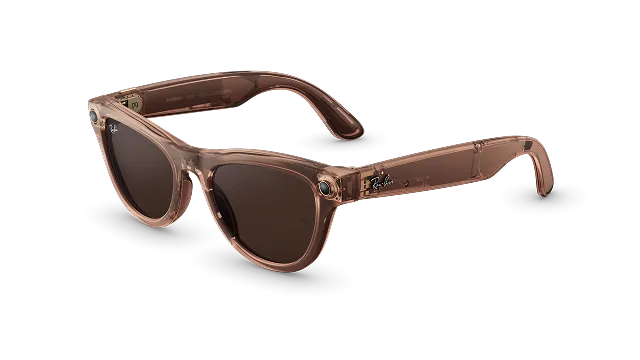
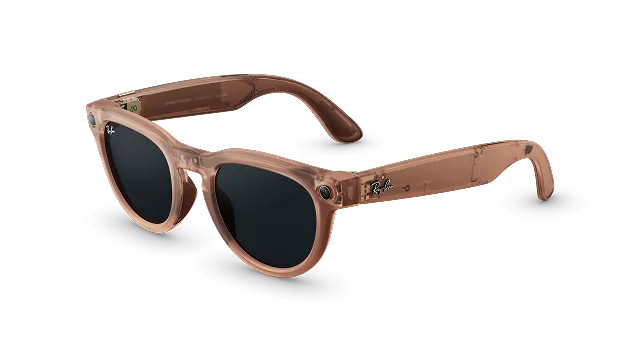
The year 2026 represents more than a simple incremental update; it is a genuine redefinition of Meta's strategy in the wearables market. By cementing its partnership with optical giant EssilorLuxottica, Meta has split its offering to address two distinct market segments: lifestyle with the Ray-Ban Meta line and pure athletic performance with the new Oakley Meta range. This strategic maturity is matched by a major technical leap: the introduction, for the first time, of concrete visual displays that free the device from its purely audio dependence. Under the hood, the widespread adoption of the Qualcomm Snapdragon AR1 Gen1 chip serves as a robust technical foundation, handling increasingly demanding data and AI streams. This shared architecture paves the way for the model that has captured all the attention this year: the Vanguard.
Oakley Meta Vanguard: AI for Athletic Performance
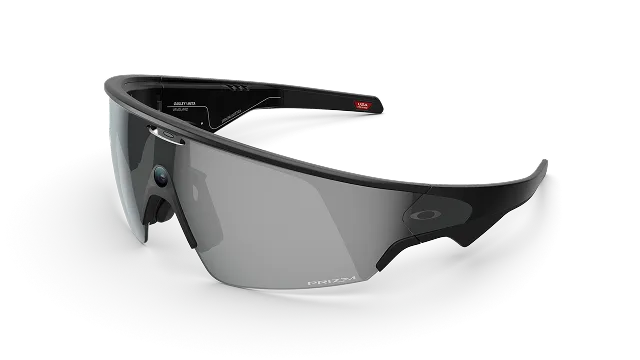
The Vanguard fits into the Oakley ecosystem as a direct answer to the needs of demanding cyclists and runners. Unlike previous lifestyle models, it prioritizes a "no-compromise performance" position, with a rugged, sweat-resistant design. However, a crucial detail sets this "pro" model apart from the rest of the range: unlike the HSTN or Ray-Ban models, the Vanguard does not support prescription lenses. For athletes requiring vision correction, this is a major pain point that immediately shifts their choice toward competitors.
Our test analysis reveals a welcome architectural change: the 12 MP sensor is now centrally mounted. This choice is vital for cycling, as it finally allows for a perfectly centered recording of the road. The 122-degree field of view provides complete immersion, although testing by road.cc points out an ergonomic limit: on a road bike, the natural downward head tilt tends to film the tarmac more than the horizon, because the camera angle is fixed.
Technically, the Vanguard impresses with its video versatility. While it captures in portrait format natively, its 3K resolution (2203 x 2938 pixels) is a strategic asset: it allows you to crop a 1080p landscape segment afterward without any noticeable loss in quality. In practice, this quick-capture capability doubles as a safety tool: in the event of an incident, a single press records a dangerous pass with enough clarity for a police report. However, for this technology to be truly useful in the middle of a workout, an interface was needed to deliver information without taking eyes off the road.
Meta Ray-Ban Display and Neural Band: The Interface of the Future?
The true technological breakthrough of 2026 lies in the introduction of the first model featuring a visual display. No longer relying solely on audio allows Meta to turn its glasses into a true real-time navigation tool. The display integrated into the right lens is a miniature marvel with a 600×600 pixel resolution, a brightness level reaching 5,000 nits to remain readable in direct sunlight, and a 90 Hz refresh rate.
To control this system, Meta introduces the Neural Band. This 42-gram wristband uses surface electromyography (sEMG) to translate muscle signals into digital commands. Equipped with haptic feedback and an 18-hour battery life, it allows users to navigate the interface with micro-gestures. This is a major step toward invisible computing, though the daily utility of this hardware duo remains to be proven against a raw comparison of the numbers.
Technical Comparison: Vanguard vs Display vs HSTN
| Model | Weight | Tested Battery Life | Storage | Major Special Feature |
|---|---|---|---|---|
| Oakley Meta Vanguard | 68 grams | 90 min (streaming) to 4h (mixed) | 32 GB (1000+ photos) | Central 122° camera, no prescription support |
| Meta Ray-Ban Display | 69-70 grams | Around 6 hours | 32 GB (1000+ photos) | Monocular display and Neural Band wristband |
| Oakley Meta HSTN | 53 grams | Up to 8 hours | 32 GB (1000+ photos) | Compatible with prescription lenses |
Ecosystem and Integrations: Garmin, Strava, and Meta AI
The effectiveness of these glasses rests on their Wi-Fi 6 and Bluetooth 5.3 connectivity. But why does this change everything? Because in 2026, this product is no longer just a gadget; it aims to simultaneously replace your premium sunglasses, action camera, and bone-conduction headphones. Integration with Garmin Connect IQ and Strava transforms the Vanguard into a virtual coach: it streams audio prompts based on your power or heart rate directly into the temples.
However, the software verdict remains the weakest link. Meta AI still stumbles on simple queries. Our tests confirm the frustrations reported by independent users: asking for a 90s techno playlist for an interval session only to be offered Simon & Garfunkel instantly breaks the workout rhythm. While the AI is promising for identifying landmarks, it still lacks the reliability required for intensive sports use.
The Dark Side: Battery Life and Surveillance
Despite the advancements, two major downsides cloud the picture. The battery life shock is the biggest disappointment: while Meta claims 6 to 9 hours of use, audio streaming drains the battery in just 90 minutes. The lack of a direct charging port requires using the proprietary case, a bulky accessory that is essential for any outing lasting more than two hours.
On an ethical level, the discretion of the device fuels controversy. BBC News and the New York Times have documented cases of harassment where individuals use these glasses to film people without their consent. The safety LED, designed to warn others, is deemed ineffective. Worse, a $60 modification kit already allows the physical deactivation of this indicator. With the arrival of facial recognition announced by Meta, the risks of mass surveillance and real-time doxxing are becoming a worrying technical reality.
Our Verdict: Should You Take the Leap in 2026?
2026 marks the entry of smart glasses into a functional era, but the price of admission is high: £499 for a Vanguard or $799 for the Display/Neural Band bundle. Is it a rational investment? For the athlete, the Vanguard offers a unique point of view and increased safety to document road incidents, provided you accept poor battery life and the lack of optical correction. For the tech enthusiast, the Display model is a fascinating window into the future of human-machine interfaces.
However, social adoption remains the major challenge. The ban enacted in July 2026 in New York courts, forcing citizens to hand over their glasses to court officers before entering, illustrates growing institutional resistance. It is a powerful tool for early adopters, but still loaded with too many technical constraints and ethical shadows for the general public.