
%20(1).png)
TP-Link Tapo Comparison 2026: L530E, L610 or L430C, Which Smart Lighting for Your Home?
The State of the Art of Connected Lighting in 2026
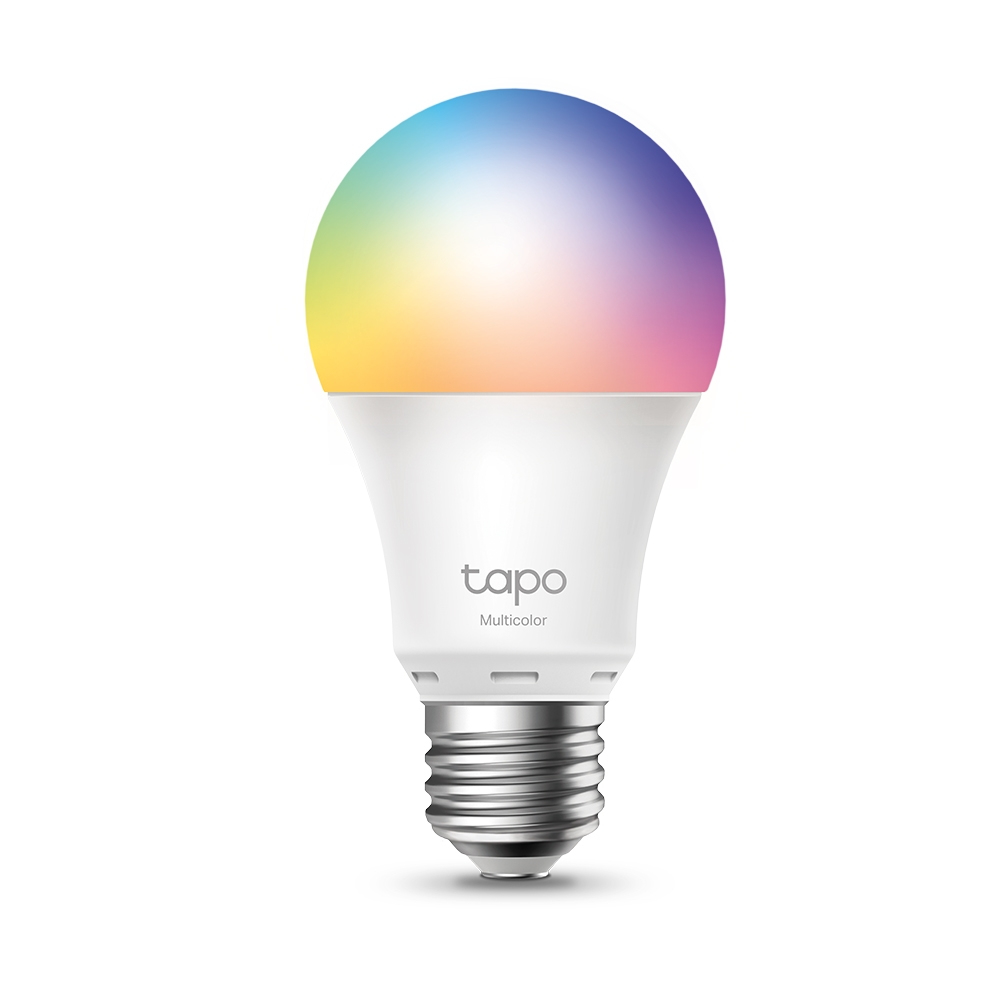
In 2026, the smart bulb has definitively left the category of gadgets to establish itself as a critical network component within the smart home infrastructure. This paradigm shift requires increased rigor in the selection of equipment: the choice of a form factor no longer only responds to an aesthetic intent, but to a strategy of optimizing the physical layer and network mesh. The TP-Link Tapo range illustrates this specialization with three distinct vectors: the L530E for general lighting, the L610 for architectural precision, and the L430C for ornamentation. For the smart home manager, understanding the specificities of these units is the indispensable prerequisite for the durability of an intelligent fire plan.
Comparative Analysis of Electro-Optical Performance
The success of an installation relies on understanding luminous flux and its propagation angles. Beyond raw power, parameters such as color temperature (Kelvins) and color rendering index (CRI) determine the chromatic fidelity of the environment. An error in beam angle can compromise the ergonomics of a workstation or the aesthetics of an architectural space.
| Parameter | Tapo L530E (Multicolor) | Tapo L610 (Projector) | Tapo L430C (Flame) |
|---|---|---|---|
| Form factor / Base | A19 (E26/E27) | PAR16 (GU10) | B38 (E14) |
| Max Flux (White) | 800 to 806 lm | 350 lm | 470 lm |
| Beam angle | 220 degrees | 40 degrees | 260 degrees |
| Active power consumption | 8.7 W to 9.0 W | 2.9 W | 4.8 W |
| Energy class | F | D | F |
| CRI | Greater than or equal to 90 (US) / 80 (EU) | Greater than or equal to 80 | Greater than 80 |
Technical examination reveals fundamental nuances. The L530E (RGBW) model shows notable optical superiority with a CRI reaching 90 in certain markets, guaranteeing near-professional chromatic rendering. However, its efficiency is asymmetric: while the white channel reaches 806 lm, the color channels are physically limited (Red at 55 lm, Green at 140 lm, and Blue at only 25 lm).
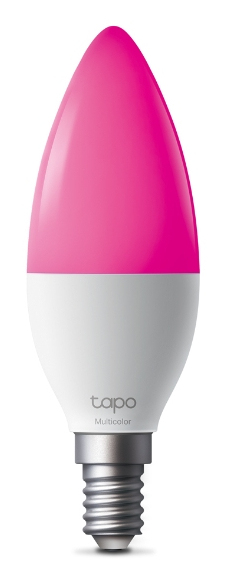
The L610 projector stands out with class D efficiency, made possible by omitting the RGB array. By focusing on a fixed spectrum of 2700K, its driver is optimized for a consumption of only 2.9W, while offering an "Ambient" mode capable of dropping to 7 lumens for dimmed atmospheres. Finally, the L430C resolves the "hot spot" problem thanks to a double-layer glass envelope that ensures perfectly homogeneous diffusion, essential for chandeliers with exposed bulbs.
The Infrastructure Challenge: Analog Dimmers and Electrical Stability
The breaking point of a smart installation often lies in its interaction with legacy electrical hardware. Unlike incandescent lamps, these Tapo units integrate AC-DC converters and microcontrollers that require a stable voltage. It is imperative to never couple them with analog wall dimmers (TRIAC).
Using a phase-cut dimmer causes thermal stress on capacitors and generates humming and flickering. Over time, component degradation can induce leakage currents, causing a "ghosting" phenomenon where the bulb retains a residual glow after software shutdown. To correct instabilities, the Dimming Calibration feature in the app allows defining software thresholds to avoid "drop-out" (premature shutdown) at low levels.
Network Architecture and Connectivity: Hubless vs. Matter
These models rely on a direct 2.4 GHz Wi-Fi topology. While the lack of a hub simplifies deployment, it heavily loads the router's DHCP lease table. Saturation of the lease pool can lead to latency or disconnections. To stabilize the infrastructure, it is recommended to lock the router's bandwidth to 20 MHz to reduce interference and optimize range. A signal with a RSSI lower than -70 dBm will require adding a mesh node.
In 2026, integration with third-party ecosystems (Apple HomeKit) is done via bridges like Homebridge or HOOBS, prioritizing local control (LAN) to minimize latency. The industry is, however, converging towards the Matter standard (embodied by the L535E), which simplifies onboarding via Bluetooth Low Energy (BLE) and the TP-Link Simple Setup (TSS) protocol, guaranteeing native interoperability without cloud dependencies.
Embedded Intelligence: Biorhythms and Energy Management 2.0
Software value-add transforms lighting into a circadian rhythm support system.
- Auto Biorhythm: This function dynamically aligns color temperature (from 2500K to 6500K) with local solar cycles, optimizing the physiological impact of light to support concentration during the day and melatonin secretion in the evening.
- Energy Monitoring 2.0: Offers tracking with updates every 5 seconds and includes overload protection capable of cutting power after 10 consecutive readings exceeding a defined threshold.
- Away Mode: Acts as a random presence simulator, an essential preventive security tool for home integrity.
Final Buying Guide: Which Model for Which Use?
Specifically, your choice should be dictated by the physical form factor and the required optical precision:
- Tapo L530E (A19): The versatile standard for replacing main light sources in living areas. Its CRI of 90 makes it the ally of demanding environments.
- Tapo L610 (PAR16): The surgical tool for suspended ceilings. Its 40° beam and 7 lm Ambient mode allow architectural highlighting without light pollution.
- Tapo L430C (B38): The aesthetic solution for wall sconces and chandeliers. Its ultra-dark 1% dimming (< 6 lm) is ideal for nightlight use.
Editorial tip: To prevent accidental resets caused by contact bounce of mechanical switches, make sure to deploy the latest firmware update. This modifies the microcontroller's detection logic to ignore micro-interruptions and stabilize your network parameters.
